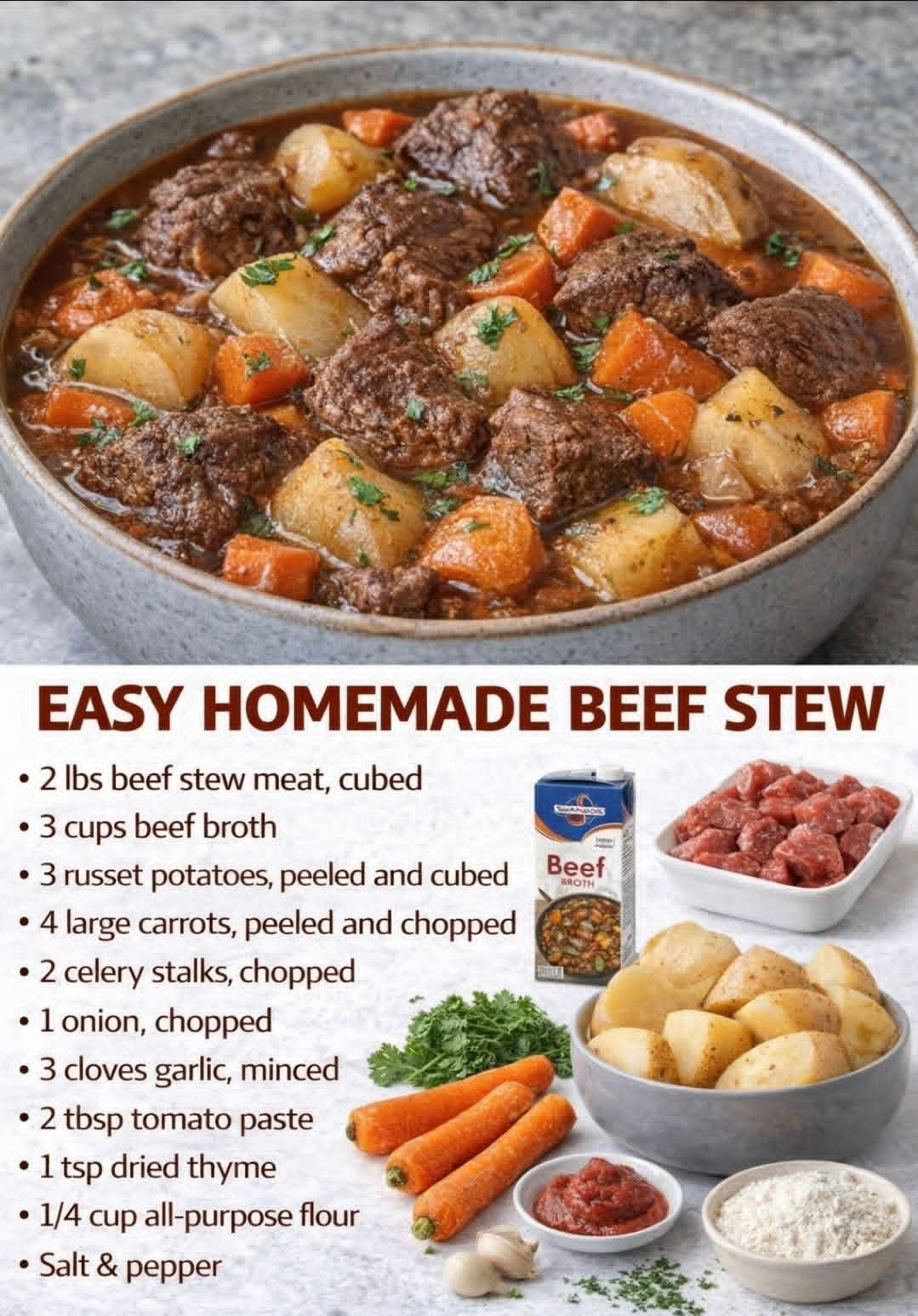
Easy Homemade Beef Stew
Few meals are as comforting and satisfying as a warm bowl of Easy Homemade Beef Stew. Tender pieces of beef, hearty potatoes, sweet carrots, onions, and a rich savory broth come together to create a classic dinner that feels like home.
This homemade beef stew is simple enough for a regular family dinner but delicious enough to serve when you have guests. The ingredients are straightforward, the preparation is easy to follow, and the slow cooking process allows the beef and vegetables to become wonderfully tender while the broth develops a deep, comforting flavor.
Whether you’re making it on a chilly evening, preparing a Sunday family meal, or simply craving something warm and hearty, this classic beef stew is a recipe worth keeping in your kitchen.
Why You’ll Love This Homemade Beef Stew
There are many reasons this recipe deserves a place in your regular dinner rotation.
Simple Ingredients
You don’t need unusual or expensive ingredients. Basic vegetables, beef, herbs, broth, and pantry staples create an incredibly flavorful meal.
Rich and Comforting
Slow cooking helps develop a savory broth while making the beef tender and the vegetables soft.
One-Pot Convenience
Most of the recipe can be prepared in one large pot, which means fewer dishes and easier cleanup.
Perfect for Families
A large pot of beef stew can provide generous servings, making it an excellent choice for family dinners.
Even Better the Next Day
Like many hearty stews, the flavors can become even more developed after resting overnight.
Ingredients
To make this easy homemade beef stew, you’ll need:
– Beef stew meat
– Potatoes
– Carrots
– Yellow onion
– Garlic
– Beef broth
– Tomato paste
– Worcestershire sauce
– Olive oil
– All-purpose flour
– Salt
– Black pepper
– Dried thyme
– Dried rosemary
– Bay leaves
– Optional mushrooms
– Optional peas
– Fresh parsley for garnish
You can adjust the herbs and vegetables according to your preferences.
Choosing the Best Beef for Stew
The type of beef you choose can make a significant difference.
Beef chuck is one of the most popular choices because it contains enough connective tissue and fat to become tender during slow cooking.
Pre-cut stew meat can also be convenient, especially when you want to save preparation time.
Cut the beef into relatively uniform pieces so they cook evenly.
Preparing the Vegetables
Peel and chop the potatoes and carrots into bite-sized pieces.
Dice the onion and mince the garlic.
Try to keep the vegetable pieces relatively similar in size.
Larger potato or carrot pieces will take longer to become tender, while very small pieces may become too soft during a long cooking process.
How to Make Easy Homemade Beef Stew
Step 1: Prepare the Beef
Pat the beef pieces dry with paper towels.
Season them generously with black pepper and a little salt.
Drying the surface helps the beef brown more effectively.
Step 2: Brown the Beef
Heat olive oil in a large heavy-bottomed pot over medium-high heat.
Add the beef in batches rather than overcrowding the pot.
Brown the pieces on several sides until they develop a deep golden-brown exterior.
This step adds an important layer of flavor to the finished stew.
Transfer the browned beef to a plate and repeat with the remaining pieces.
Step 3: Cook the Aromatics
Add the chopped onion to the same pot.
Cook until it begins to soften.
Add the garlic and cook briefly until fragrant.
The browned bits left at the bottom of the pot will help flavor the onions and garlic.
Step 4: Add Tomato Paste
Stir in the tomato paste.
Cook it briefly while stirring.
Allowing tomato paste to cook for a short time can deepen its flavor and add richness to the stew.
Step 5: Deglaze the Pot
Pour in a portion of the beef broth.
Use a wooden spoon to scrape the browned bits from the bottom of the pot.
These browned bits contain plenty of flavor and help create a richer broth.
Step 6: Return the Beef
Add the browned beef back to the pot.
Pour in the remaining broth.
Add Worcestershire sauce, thyme, rosemary, and bay leaves.
Stir everything together.
Step 7: Add the Vegetables
Add the carrots and potatoes.
If you’re using mushrooms, they can be added at this stage as well.
Make sure the ingredients are distributed evenly throughout the pot.
Step 8: Simmer Slowly
Bring the stew to a gentle simmer.
Reduce the heat, cover the pot, and allow the stew to cook slowly until the beef becomes tender and the vegetables are cooked through.
Avoid aggressive boiling because a gentle simmer is better for developing tender beef.
Step 9: Adjust the Consistency
If the stew is thinner than you prefer, you can thicken it with a cornstarch slurry or a small amount of flour mixed with water.
Add the thickener gradually while stirring.
Allow the stew to simmer for several minutes afterward so the thickener can work properly.
Step 10: Finish and Serve
Remove the bay leaves.
Taste the stew and adjust the seasoning if necessary.
Garnish with fresh parsley before serving.
Serve hot with crusty bread, dinner rolls, or another favorite side.
Tips for the Best Beef Stew
Don’t Skip Browning the Beef
Although it adds a little extra preparation time, browning the beef creates a deeper, more complex flavor.
Avoid Overcrowding the Pot
If too many pieces of beef are added at once, they may steam instead of brown.
Brown the meat in batches when necessary.
Use a Gentle Simmer
A slow, gentle simmer helps break down connective tissue and makes tougher cuts of beef tender.
Cut Vegetables Carefully
Keep potatoes and carrots relatively uniform in size for even cooking.
Season Gradually
Broth and Worcestershire sauce can contain salt, so adjust the seasoning carefully as the stew cooks.
How to Make the Stew Thicker
A thick, rich stew is especially satisfying on a cold day.
There are several ways to achieve the consistency you prefer.
Flour
You can lightly coat the beef with flour before browning.
The flour can help thicken the broth as the stew cooks.
Cornstarch
A cornstarch slurry is another easy option.
Mix cornstarch with cold water until smooth, then stir it into the simmering stew.
Mash Some Potatoes
For a more natural approach, mash a few cooked potatoes directly into the broth.
The potato starch can help thicken the liquid.
What Vegetables Can You Add?
Traditional beef stew usually includes potatoes and carrots, but there are plenty of other vegetables you can add.
Try:
– Mushrooms
– Celery
– Green beans
– Peas
– Corn
– Pearl onions
– Bell peppers
– Sweet potatoes
For delicate vegetables such as peas or green beans, consider adding them later so they retain more texture.
Flavor Variations
Classic Herb Beef Stew
Use thyme, rosemary, parsley, and bay leaves for a traditional herb flavor.
Mushroom Beef Stew
Add plenty of sliced mushrooms for an earthy and savory variation.
Spicy Beef Stew
Add chili flakes, smoked paprika, or a small amount of cayenne pepper.
Garlic Herb Beef Stew
Increase the garlic and add additional fresh herbs for a more aromatic flavor.
Red Wine Beef Stew
For a richer variation, some cooks add a small amount of dry red wine along with the broth. Allow the wine to cook appropriately as part of the stew.
What to Serve With Beef Stew
This stew is hearty enough to serve on its own, but the right side dish can make it even better.
Try serving it with:
– Crusty French bread
– Garlic bread
– Dinner rolls
– Mashed potatoes
– Green salad
– Steamed green beans
– Roasted vegetables
– Buttered noodles
– Cornbread
Crusty bread is especially good for soaking up the rich stew broth.
How to Store Homemade Beef Stew
Allow the stew to cool appropriately before transferring it to airtight containers.
Store it in the refrigerator and enjoy it within a few days.
When reheating, warm the stew thoroughly over medium heat or in the microwave.
If the broth has thickened significantly in the refrigerator, add a small splash of broth or water while reheating.
Can You Freeze Beef Stew?
Yes, beef stew can be frozen.
For the best results, cool the stew appropriately and place it into freezer-safe containers.
Individual portions are convenient because you can thaw only what you need.
Allow frozen stew to thaw safely in the refrigerator before reheating.
The vegetables may have a slightly softer texture after freezing and thawing, but the stew can still be flavorful and satisfying.
Frequently Asked Questions
What is the best cut of beef for stew?
Beef chuck is a popular choice because it has enough connective tissue and fat to become tender during slow cooking.
Can I use pre-cut stew meat?
Yes. Pre-cut stew meat is convenient and works well for this recipe.
Why is my beef still tough?
Beef stew meat often needs enough time to allow its connective tissue to break down.
If the beef is still tough, it may simply need more gentle cooking time.
Can I make beef stew ahead of time?
Absolutely. Beef stew is an excellent make-ahead meal.
The flavors can develop further after resting, making it a convenient option for meal preparation.
Can I make this recipe in a slow cooker?
Yes. You can adapt the recipe for a slow cooker. Browning the beef and aromatics first can add extra flavor before transferring everything to the slow cooker.
Can I add frozen peas?
Yes. Frozen peas are best added near the end of cooking so they maintain their color and texture.
How do I know when the beef is tender?
The beef should be easy to pierce with a fork and should not feel chewy or resistant.
Make-Ahead Tips
If you want to prepare this meal in advance, make the entire stew and allow it to cool appropriately.
Store it in the refrigerator and reheat it when you’re ready to serve.
You can also prepare the vegetables ahead of time and keep them refrigerated until cooking.
For busy weekdays, preparing the ingredients the night before can make dinner much easier.
A Perfect Cold-Weather Meal
Homemade beef stew is especially satisfying during cooler weather.
The warm broth, tender beef, soft potatoes, and sweet carrots create a combination that feels comforting from the first bite.
The aroma that fills the kitchen while the stew simmers is almost as enjoyable as the meal itself.
It is the kind of dinner that invites everyone to gather around the table.
Final Thoughts
Easy Homemade Beef Stew is a classic comfort-food recipe made with simple ingredients and plenty of flavor.
Tender beef, potatoes, carrots, onions, garlic, herbs, and a rich savory broth come together to create a satisfying meal that is perfect for family dinners.
The recipe is flexible enough to adapt with different vegetables, herbs, and seasonings, while the basic method remains simple and reliable.
Serve it with warm crusty bread, garnish it with fresh parsley, and enjoy a comforting homemade dinner that is hearty, flavorful, and perfect for sharing.