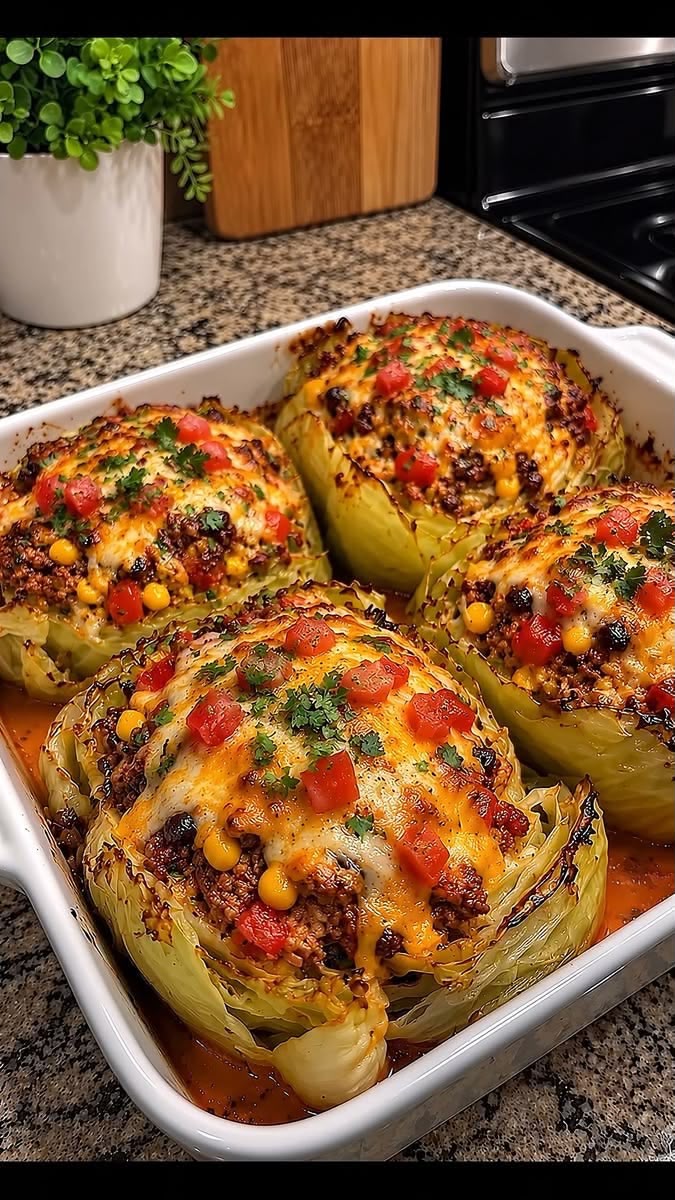
Baked Loaded Stuffed Cabbage Bowls with Melted Cheese
Meta Description: Discover these delicious baked loaded stuffed cabbage bowls with melted cheese, savory ground beef, tender rice, rich tomato sauce, and a golden, bubbly cheese topping. An easy, comforting dinner for the whole family!
Recipe Category: Dinner
Cuisine: American-Inspired Comfort Food
Prep Time: 25 minutes
Cook Time: 45–55 minutes
Total Time: Approximately 1 hour 20 minutes
Servings: 4
Difficulty: Easy to Moderate
Introduction
If you love hearty comfort food, these Baked Loaded Stuffed Cabbage Bowls with Melted Cheese are a recipe worth adding to your dinner menu. This delicious dish combines tender roasted cabbage, savory ground beef, fluffy rice, rich tomato sauce, and a generous layer of melted cheese to create a satisfying meal packed with flavor.
Traditional stuffed cabbage rolls are popular in many kitchens, but preparing them can take time. Separating the cabbage leaves, filling each one, and carefully rolling everything together can feel like a lot of work, especially on a busy weeknight. These stuffed cabbage bowls offer a simpler alternative while keeping the familiar flavors that make stuffed cabbage so comforting.
Instead of wrapping the filling inside individual cabbage leaves, you use cabbage halves as edible bowls. Each one holds a generous portion of seasoned beef, cooked rice, and tomato sauce. Mozzarella and cheddar cheese melt over the top, creating a creamy, golden finish that complements the tender cabbage and savory filling.
Another great thing about this recipe is how easy it is to customize. You can replace ground beef with ground turkey, add extra vegetables, adjust the seasonings, or experiment with different cheeses. You can even prepare the filling ahead of time to make dinner preparation quicker.
Whether you are cooking for your family, preparing meals for the week, or simply craving something warm and satisfying, these baked stuffed cabbage bowls offer a delicious combination of familiar ingredients.
Serve them straight from the oven with a fresh salad, roasted vegetables, or warm bread. With their tender texture, rich tomato flavor, and gooey cheese topping, these cabbage bowls may quickly become one of your favorite homemade dinners.
Why You Will Love These Stuffed Cabbage Bowls
There are plenty of reasons to make this recipe part of your regular meal rotation.
Easy preparation: Using cabbage halves eliminates the need to roll individual cabbage leaves, making the recipe more approachable for everyday cooking.
Rich, comforting flavors: Ground beef, tomato sauce, garlic, herbs, and melted cheese create a satisfying combination that works beautifully together.
A delicious way to enjoy cabbage: Baking softens the cabbage and brings out its naturally mild, slightly sweet flavor.
Customizable ingredients: You can use different proteins, cheeses, grains, and vegetables depending on what you have available.
Perfect for family dinners: Each cabbage bowl makes an individual serving, making the dish easy to portion and serve.
Great for leftovers: The cooked filling and cabbage can be refrigerated and reheated for another meal.
Ingredients for Baked Loaded Stuffed Cabbage Bowls
This recipe uses everyday ingredients that combine to create a flavorful filling and tender cabbage base.
For the Cabbage Bowls
– 2 small green cabbage heads, approximately 2 pounds each
– 2 tablespoons olive oil
– 1/2 teaspoon salt
– 1/4 teaspoon ground black pepper
Green cabbage is a reliable choice because its leaves are sturdy enough to hold the filling. Look for cabbage heads that feel firm and heavy for their size, with tightly packed leaves.
For the Ground Beef Filling
– 1 pound lean ground beef
– 1 medium yellow onion, finely chopped
– 3 garlic cloves, minced
– 1 cup cooked rice
– 1 can crushed tomatoes, approximately 14–15 ounces
– 2 tablespoons tomato paste
– 1/2 cup beef broth or water
– 1 teaspoon Italian seasoning
– 1 teaspoon paprika
– 1/2 teaspoon dried oregano
– 1/2 teaspoon salt, or to taste
– 1/4 teaspoon ground black pepper
– 1 tablespoon olive oil, if needed
Cooked white rice provides a soft texture and helps absorb the savory tomato sauce. Brown rice is another option if you prefer a nuttier flavor.
Lean ground beef adds protein and a rich savory taste. If you use fattier beef, you may want to drain excess fat after browning it.
For the Melted Cheese Topping
– 1 cup shredded mozzarella cheese
– 1/2 cup shredded cheddar cheese
– 2 tablespoons grated Parmesan cheese, optional
– 1 tablespoon chopped fresh parsley, optional
Mozzarella melts into a stretchy, creamy layer, while cheddar adds a stronger, richer flavor. Parmesan provides a salty finish, and parsley adds a fresh touch.
For especially smooth melting, shred mozzarella and cheddar from blocks when possible. Pre-shredded cheese is convenient, however, and works perfectly well for everyday cooking.
How to Make Baked Loaded Stuffed Cabbage Bowls with Melted Cheese
Follow these steps to prepare tender cabbage bowls filled with savory beef, rice, tomato sauce, and melted cheese.
Step 1: Preheat the Oven
Preheat your oven to 375°F (190°C).
Lightly grease a large baking dish with olive oil or cooking spray. Choose a dish that can comfortably hold the cabbage halves without crowding them too tightly.
Preparing the baking dish in advance makes assembly easier and helps prevent the cabbage from sticking.
Step 2: Prepare the Cabbage
Remove any damaged outer leaves from the cabbage heads. Rinse the cabbages under cool running water and pat them dry.
Place each cabbage on a stable cutting board and cut it in half vertically, from top to bottom through the core.
Carefully trim away the hard central core from each half. Use a small knife or spoon to remove a little of the inner cabbage, creating a shallow cavity for the filling.
Be careful not to remove too much cabbage from the bottom or sides. The cabbage needs to remain sturdy enough to hold the beef mixture during baking.
Brush the cut surfaces with olive oil and season lightly with salt and black pepper.
Arrange the cabbage halves cut-side up in the prepared baking dish.
Step 3: Partially Bake the Cabbage Bowls
Cover the baking dish loosely with aluminum foil and bake the cabbage for 20–25 minutes.
This initial baking stage begins softening the cabbage before the filling is added. It also helps the cabbage cook evenly during the final baking stage.
After 20 minutes, carefully remove the foil and check the cabbage with a fork. The edges should be starting to soften, although the cabbage does not need to be completely tender yet.
If the cabbage heads are particularly large or dense, they may require a few extra minutes.
Keep the oven on because the stuffed cabbage bowls will return to the oven later.
Step 4: Brown the Ground Beef
While the cabbage is baking, prepare the filling.
Heat a large skillet over medium heat. Add a little olive oil if needed, then add the ground beef.
Cook for approximately 6–8 minutes, breaking the meat into small pieces with a wooden spoon or spatula.
Continue cooking until the beef is browned and no longer pink. If there is a large amount of excess fat, carefully drain it before continuing.
Browning the meat develops a deeper flavor and creates a savory foundation for the tomato sauce.
Step 5: Add the Onion and Garlic
Add the chopped onion to the skillet with the beef.
Cook for approximately 3–4 minutes, stirring occasionally, until the onion begins to soften.
Add the minced garlic and cook for another 30–60 seconds. Stir frequently to prevent the garlic from burning.
The onion adds sweetness, while garlic gives the filling its distinctive savory aroma.
Step 6: Make the Tomato Sauce
Stir the tomato paste into the beef mixture and cook for about one minute.
Add the crushed tomatoes, beef broth, Italian seasoning, paprika, oregano, salt, and black pepper.
Mix everything thoroughly and bring the sauce to a gentle simmer.
Allow the mixture to cook for 5–7 minutes, stirring occasionally. The sauce should thicken slightly while remaining moist enough to coat the beef.
If the sauce becomes too thick, add a small splash of broth or water. If it seems too watery, let it simmer uncovered for a few additional minutes.
Taste the mixture and adjust the seasoning as needed.
Step 7: Add the Cooked Rice
Stir the cooked rice into the beef and tomato mixture.
Mix until the rice is evenly distributed throughout the filling. Allow everything to cook together for another 2–3 minutes so the flavors can combine.
The filling should be moist but not soupy. Too much liquid can make the cabbage bowls watery, while an overly dry filling may become crumbly during baking.
If you want extra vegetables, add finely chopped bell peppers, mushrooms, or shredded carrots at this stage. Cook them until softened before proceeding.
Step 8: Fill the Cabbage Bowls
Remove the partially baked cabbage halves from the oven.
Carefully spoon the beef, rice, and tomato mixture into the center of each cabbage bowl. Divide the filling evenly among the four halves.
Press the filling gently into place without packing it too tightly. Leave a little room at the top for the cheese.
If you have extra filling, spoon it into the baking dish around the cabbage halves. It will absorb some of the cooking juices and can be served alongside the cabbage.
Step 9: Add the Cheese Topping
Combine the shredded mozzarella and cheddar in a small bowl.
Sprinkle the cheese mixture evenly over the filling in each cabbage bowl. Add grated Parmesan if desired.
Make sure each portion receives a generous amount of cheese for a rich, bubbly finish.
The mozzarella will melt into the filling, while the cheddar adds flavor and color to the top.
Step 10: Bake Until Tender and Golden
Return the stuffed cabbage bowls to the oven.
Bake uncovered for 20–25 minutes, or until the cabbage is fork-tender, the filling is hot throughout, and the cheese is melted and lightly golden.
Cooking time can vary depending on the size and thickness of the cabbage halves. Check the thickest part with a fork. It should be easy to pierce without the cabbage falling apart.
Because the beef and rice have already been cooked, the final baking stage mainly tenderizes the cabbage, heats the filling, and melts the cheese.
For a more golden topping, place the dish under the broiler for 1–2 minutes at the end. Watch carefully because cheese can brown very quickly.
Step 11: Rest, Garnish, and Serve
Remove the baking dish from the oven and allow the stuffed cabbage bowls to rest for approximately 5 minutes.
This short resting period helps the filling settle and makes serving easier.
Sprinkle with freshly chopped parsley, if desired.
Serve warm, making sure each portion includes tender cabbage, plenty of savory filling, and melted cheese.
Tips for Perfect Stuffed Cabbage Bowls
A few simple techniques can make a noticeable difference in the finished dish.
Choose Firm Cabbage Heads
Firm cabbage heads with tightly packed leaves are easier to cut and shape. Smaller heads are often more manageable and make convenient individual portions.
Green cabbage is the easiest choice, although savoy cabbage can also work. Its leaves are more delicate, so handle them gently.
Do Not Skip the Initial Baking
Raw cabbage is firm and needs time to soften. Partially baking the cabbage before adding the filling helps the finished dish cook more evenly.
Keep the Filling Moist, Not Watery
A thick tomato sauce helps the rice and beef stay moist without making the dish soggy. Simmer the sauce before adding the rice and avoid adding too much liquid.
Season in Layers
Season the cabbage lightly, then season the beef mixture separately. Taste the filling before assembly and adjust the salt, pepper, and herbs as necessary.
Use a Combination of Cheeses
Mozzarella provides a stretchy texture, while cheddar adds a richer taste. A little Parmesan can provide additional savory flavor.
Check for Tenderness
Cabbage thickness varies, so cooking times are only estimates. Use a fork to check whether the thickest part is tender before removing the dish from the oven.
Delicious Variations to Try
One of the best things about this recipe is how easily you can adapt it.
Ground Turkey Stuffed Cabbage Bowls
Replace the ground beef with ground turkey for a different flavor. Turkey is often leaner, so you may need a little extra olive oil to prevent the filling from drying out.
Chicken broth can replace beef broth if you prefer a milder flavor.
Spicy Loaded Cabbage Bowls
For extra heat, add red pepper flakes, cayenne pepper, or finely chopped jalapeños to the filling.
You can also substitute pepper jack cheese for cheddar to add a spicy, creamy topping.
Low-Carbohydrate Cabbage Bowls
Replace the cooked rice with cauliflower rice for a lower-carbohydrate alternative.
Cook the cauliflower rice briefly before adding it to the filling, and allow excess moisture to evaporate. This helps prevent the mixture from becoming watery.
Vegetarian Stuffed Cabbage Bowls
Replace the ground beef with cooked lentils, chopped mushrooms, or a plant-based ground meat alternative.
Use vegetable broth instead of beef broth. Lentils provide a hearty texture, while mushrooms contribute a rich, savory flavor.
Extra-Cheesy Cabbage Bowls
Add shredded Monterey Jack or provolone to the mozzarella and cheddar mixture for a richer cheese topping.
You can also sprinkle extra Parmesan over the top just before serving.
Vegetable-Packed Stuffed Cabbage Bowls
Add chopped bell peppers, shredded carrots, mushrooms, or spinach to the filling.
Cook firmer vegetables with the onion until softened. Stir spinach into the mixture near the end of cooking.
These additions bring more texture and variety to the filling.
What to Serve with Stuffed Cabbage Bowls
These cabbage bowls are hearty enough to serve as a complete meal, but a side dish can make dinner even more satisfying.
Fresh green salad: Lettuce, cucumber, tomatoes, and a light vinaigrette provide a refreshing contrast to the rich filling.
Roasted vegetables: Roasted broccoli, carrots, zucchini, or green beans complement the savory beef and melted cheese.
Crusty bread: Serve warm bread for soaking up any extra tomato sauce.
Garlic bread: Its crisp texture and savory flavor pair naturally with the tomato and cheese topping.
Mashed potatoes: Creamy mashed potatoes make this meal especially comforting.
Steamed vegetables: Broccoli or green beans are simple options for an easy weeknight dinner.
Choose one or two sides depending on how substantial you want the meal to be.
How to Store Leftovers
Allow leftover stuffed cabbage bowls to cool slightly, then transfer them to airtight containers.
Refrigerate within two hours of cooking and consume within 3–4 days.
Keep the cabbage bowls with their cooking juices to help prevent the filling from drying out.
Can You Freeze Stuffed Cabbage Bowls?
Yes. Cooked stuffed cabbage bowls can be frozen, although the cabbage may become softer after thawing.
Allow the dish to cool, divide it into individual portions, and place the portions in freezer-safe containers. Freeze for approximately 2–3 months for best quality.
Label the containers with the date so you can keep track of storage time.
Thaw portions in the refrigerator overnight before reheating when possible.
How to Reheat Stuffed Cabbage Bowls
To reheat in the oven, place the cabbage bowls in an oven-safe dish and cover loosely with foil. Heat at 350°F (175°C) until warmed throughout.
Remove the foil during the last few minutes if you want the cheese topping to become bubbly again.
Individual portions can also be reheated in the microwave. Cover loosely with a microwave-safe lid and heat in short intervals, checking the center between intervals.
Reheat leftovers until the center reaches 165°F (74°C). Avoid repeatedly cooling and reheating the same portion.
Frequently Asked Questions
Can I Make Stuffed Cabbage Bowls Ahead of Time?
Yes. Prepare the beef and rice filling up to one day ahead and refrigerate it in an airtight container.
You can also partially bake the cabbage in advance. Assemble the bowls when you are ready to finish cooking them.
If you assemble the complete dish ahead of time, refrigerate it promptly and allow for additional baking time if the ingredients are cold.
Do I Need to Cook the Rice Before Adding It?
Yes. This recipe uses cooked rice because the final baking time is not long enough to reliably cook raw rice.
Using leftover cooked rice also makes preparation quicker.
What Cheese Works Best?
Mozzarella and cheddar make an excellent combination. Mozzarella melts smoothly, while cheddar contributes a stronger flavor.
Parmesan, provolone, and Monterey Jack are also good choices.
How Do I Keep the Cabbage Bowls from Falling Apart?
Leave enough cabbage around the sides and bottom when creating the cavity. Avoid scooping out too much of the interior, and partially bake the cabbage until it begins to soften.
A baking dish that supports the cabbage halves can also help them hold their shape.
Can I Use Red Cabbage Instead of Green Cabbage?
Yes, although red cabbage has a slightly different flavor and texture. It may require a different cooking time depending on its thickness.
Green cabbage is generally the easiest option for this recipe.
Can I Make This Recipe Without Rice?
Absolutely. You can omit the rice and add more beef or vegetables, or replace it with cooked quinoa or cauliflower rice.
The filling will have a different texture, so adjust the sauce as needed.
Can I Use a Different Ground Meat?
Yes. Ground turkey, ground chicken, or ground pork can replace the beef.
Adjust the cooking time as necessary and make sure the meat reaches a safe internal temperature before assembling the dish.
How Can I Make the Recipe Spicier?
Add red pepper flakes, cayenne pepper, or diced jalapeños to the filling. Pepper jack cheese can also add heat.
Start with a small quantity and adjust according to your preference.
Is This Recipe Suitable for Meal Preparation?
Yes. Divide the finished cabbage bowls into individual portions and refrigerate them promptly.
They can be stored in the refrigerator for 3–4 days and reheated thoroughly before serving.
Common Mistakes to Avoid
Overfilling the cabbage: Too much filling can spill over the sides. Divide it evenly and leave room for the cheese.
Using watery sauce: Excess liquid can make the filling soggy. Simmer the tomato sauce until it thickens slightly before adding the rice.
Overcooking the cabbage during the first bake: If the cabbage becomes too soft before filling, it may fall apart. Partially bake it until it begins to soften.
Adding cheese too early: Cheese can become too brown if it stays in the oven for too long. Add it during assembly for the final baking stage.
Forgetting to taste the filling: Cabbage has a mild flavor, so a well-seasoned filling is important. Taste and adjust the seasonings before assembling the bowls.
Adding too much salt: Broth, canned tomatoes, and cheese can already contain salt. Season gradually and taste as you go.
Estimated Nutrition Information
The following nutritional values are approximate estimates per serving, assuming four servings made with lean ground beef, cooked white rice, mozzarella, and cheddar.
– Calories: Approximately 500–600
– Protein: Approximately 30–35 grams
– Carbohydrates: Approximately 35–45 grams
– Fat: Approximately 25–35 grams
– Fiber: Approximately 6–9 grams
Actual values will vary depending on the size of the cabbage, the fat content of the beef, the exact amount of filling used, and the brands of cheese and tomato products.
For more accurate nutrition information, calculate the values using the exact ingredients and quantities you use. These estimates are not laboratory-verified.
Final