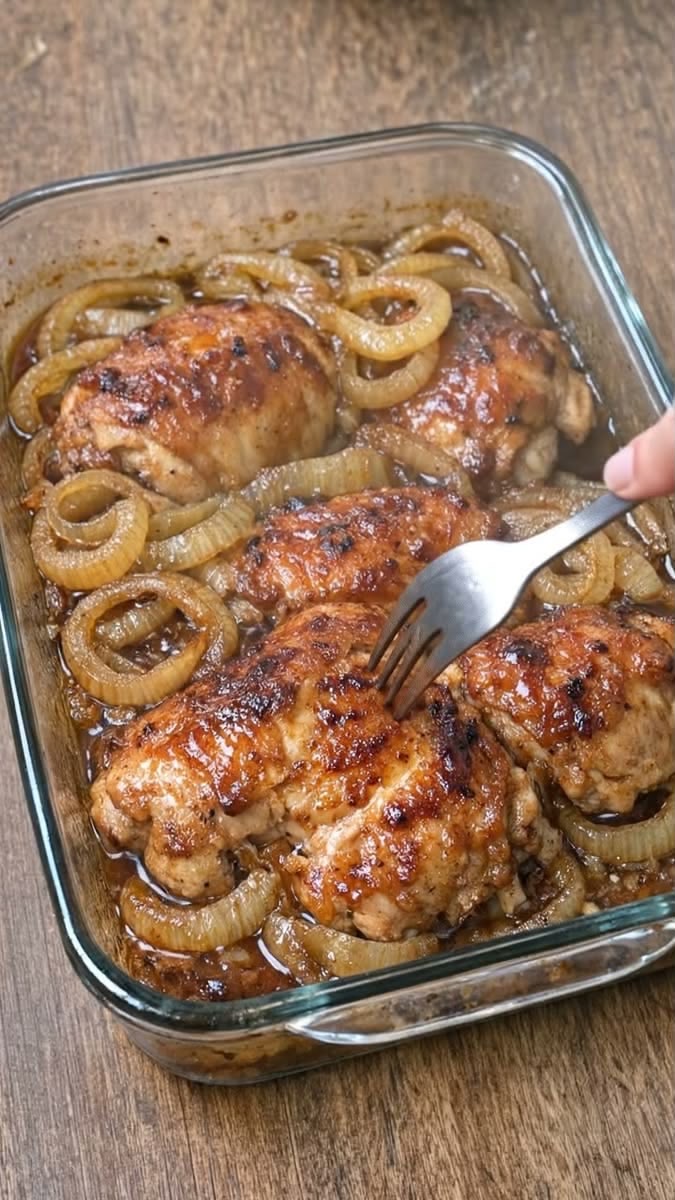
CARAMELIZED ONION CHICKEN
Caramelized Onion Chicken is a comforting, flavorful dinner made with tender, golden-seared chicken smothered in sweet caramelized onions and a rich, savory pan sauce. The onions slowly cook until soft, golden, and deeply flavorful, creating the perfect complement to juicy chicken and fragrant herbs.
This easy homemade recipe transforms simple ingredients into a restaurant-style meal without complicated techniques. Whether you’re preparing a cozy weeknight dinner or something special for the weekend, this dish delivers delicious flavor in every bite.
Serve it with creamy mashed potatoes, fluffy rice, roasted vegetables, or crusty bread to soak up every drop of the delicious onion sauce.
WHY YOU’LL LOVE THIS CARAMELIZED ONION CHICKEN
- Rich, savory flavor: Sweet caramelized onions pair beautifully with tender chicken and a delicious pan sauce.
- Simple ingredients: You only need everyday pantry staples, chicken, onions, and a few seasonings.
- Perfect for busy evenings: The preparation is straightforward, and most of the flavor develops naturally in the pan.
- Versatile serving options: Enjoy it with potatoes, rice, pasta, or vegetables.
- Family-friendly comfort food: The mild sweetness of the onions and savory chicken make a satisfying combination.
- Easy to customize: Add mushrooms, garlic, cheese, herbs, or a splash of cream to create your favorite version.
WHAT IS CARAMELIZED ONION CHICKEN?
Caramelized Onion Chicken is a chicken dish in which seasoned chicken is seared until golden and then served with onions cooked slowly until they become soft, sweet, and deeply browned.
Unlike simply sautéed onions, properly caramelized onions develop a more concentrated flavor as their natural sugars brown over time. A little chicken broth helps lift the flavorful browned bits from the pan and creates a delicious sauce.
Some versions include cream or cheese, while others use a lighter broth-based sauce. This recipe uses chicken broth, garlic, and herbs for a rich, savory finish without requiring heavy cream.
INGREDIENTS YOU’LL NEED
FOR THE CHICKEN
- 4 boneless, skinless chicken breasts, about 1½–2 pounds total
- 2 tablespoons olive oil
- 1 teaspoon paprika
- 1 teaspoon garlic powder
- ½ teaspoon onion powder
- ½ teaspoon dried thyme
- ½ teaspoon salt, or to taste
- ¼ teaspoon black pepper
Boneless chicken thighs can also be used if you prefer darker, juicier meat.
FOR THE CARAMELIZED ONIONS
- 3 large yellow onions, thinly sliced
- 2 tablespoons unsalted butter
- 1 tablespoon olive oil
- ½ teaspoon salt
- 1 teaspoon brown sugar, optional
- 3 cloves garlic, minced
- 1 teaspoon fresh thyme leaves or ½ teaspoon dried thyme
The brown sugar is optional. Onions naturally become sweet as they caramelize, so you can leave it out if you prefer a less sweet sauce.
FOR THE PAN SAUCE
- 1 cup chicken broth
- 1 teaspoon Worcestershire sauce
- 1 teaspoon Dijon mustard, optional
- 1 tablespoon balsamic vinegar, optional
- 1 tablespoon chopped fresh parsley
- Salt and black pepper, to taste
OPTIONAL CREAMY FINISH
- ¼ cup heavy cream
- ¼ cup freshly grated Parmesan cheese
These ingredients are optional if you prefer a creamy, richer sauce.
HOW TO MAKE CARAMELIZED ONION CHICKEN
STEP 1: PREPARE THE CHICKEN
Pat the chicken breasts dry with paper towels. If they are especially thick, carefully slice them horizontally into thinner cutlets so they cook more evenly.
In a small bowl, combine the paprika, garlic powder, onion powder, thyme, salt, and black pepper.
Season both sides of the chicken with the mixture.
Allow the chicken to sit for a few minutes while you prepare the skillet.
STEP 2: SEAR THE CHICKEN
Heat the olive oil in a large skillet over medium-high heat.
Add the chicken in a single layer, working in batches if necessary to avoid overcrowding the pan.
Sear for approximately 4–5 minutes per side, depending on thickness, until golden brown. The chicken does not need to be completely cooked at this stage because it will finish cooking later.
Transfer the chicken to a clean plate and set aside.
Keep the browned bits in the skillet because they add wonderful flavor to the onion sauce.
STEP 3: COOK THE ONIONS SLOWLY
Reduce the heat to medium-low.
Add the butter and olive oil to the same skillet. Once the butter has melted, add the sliced onions and salt.
Stir to coat the onions evenly in the fat.
Cook for approximately 20–30 minutes, stirring every few minutes. If the onions begin browning too quickly, reduce the heat slightly.
At first, the onions will soften and release moisture. Gradually, that moisture will evaporate, and the onions will become golden brown, tender, and sweet.
For deeper flavor, allow the onions to develop a rich golden-brown color without letting them burn.
If the pan becomes too dry or browned bits start sticking excessively, add a small splash of water and scrape the bottom gently.
STEP 4: ADD GARLIC AND HERBS
When the onions are deeply golden and soft, add the minced garlic and thyme.
Cook for approximately 30–60 seconds, stirring constantly, until fragrant.
If using brown sugar, add it during the final few minutes of cooking the onions.
Avoid adding garlic too early because it can burn during the longer caramelization process.
STEP 5: MAKE THE ONION SAUCE
Pour the chicken broth into the skillet.
Use a wooden spoon to scrape up the browned bits from the bottom of the pan.
Stir in the Worcestershire sauce and Dijon mustard, if using.
Add the balsamic vinegar for a touch of acidity that balances the sweetness of the onions.
Bring the mixture to a gentle simmer and cook for 3–5 minutes, allowing the flavors to combine and the sauce to reduce slightly.
Taste and adjust the salt and black pepper as needed.
STEP 6: RETURN THE CHICKEN TO THE SKILLET
Place the seared chicken breasts back into the skillet, nestling them into the caramelized onions and sauce.
Spoon some of the onions over each piece of chicken.
Reduce the heat to low, cover loosely, and simmer gently until the chicken is fully cooked.
The exact time will depend on the thickness of the chicken. Use a food thermometer to check that the thickest part reaches 165°F (74°C).
Avoid boiling the sauce vigorously because gentle cooking helps keep the chicken tender.
STEP 7: MAKE IT CREAMY, IF DESIRED
For a creamy variation, transfer the fully cooked chicken briefly to a clean plate.
Stir the heavy cream into the onion sauce over low heat. Add the Parmesan cheese gradually, stirring until melted and smooth.
Return the chicken to the skillet and spoon the creamy onion sauce over the top.
Heat gently for another minute or two, without allowing the sauce to boil rapidly.
If you prefer the original broth-based version, simply skip this step.
STEP 8: GARNISH AND SERVE
Sprinkle the chicken with freshly chopped parsley and a little extra black pepper.
Serve immediately with generous spoonfuls of caramelized onions and sauce.
For an especially comforting meal, place the chicken over mashed potatoes or rice and pour the onion sauce over everything.
TIPS FOR THE BEST CARAMELIZED ONION CHICKEN
BE PATIENT WITH THE ONIONS
The most important part of this recipe is giving the onions enough time to caramelize. High heat may brown the outside quickly, but it can also burn them before they become soft and sweet.
SLICE THE ONIONS EVENLY
Uniform slices cook at a similar rate, making it easier to achieve consistent caramelization.
SEAR THE CHICKEN FIRST
Searing develops a golden crust and leaves flavorful browned bits in the skillet that enrich the sauce.
DON’T CROWD THE PAN
If the chicken pieces are packed too tightly together, they may steam rather than brown. Cook them in batches when necessary.
USE BROTH TO BUILD FLAVOR
Scraping the browned bits into the chicken broth adds depth and creates a more flavorful sauce.
CHECK THE CHICKEN TEMPERATURE
Chicken breasts can become dry if overcooked. Remove them from the heat once the thickest part reaches 165°F (74°C).
EASY VARIATIONS
FRENCH ONION CHICKEN
Add a little extra thyme and use beef broth instead of chicken broth if desired. Transfer the finished chicken and onions to an oven-safe dish, top with Swiss or Gruyère cheese, and broil briefly until the cheese melts and turns golden.
CREAMY CARAMELIZED ONION CHICKEN
Add heavy cream and Parmesan to the finished sauce for a smooth, rich texture. This version pairs especially well with fettuccine, mashed potatoes, or rice.
MUSHROOM AND ONION CHICKEN
Add 8 ounces of sliced mushrooms after the onions have softened. Cook until the mushrooms release their moisture and become golden, then continue with the garlic and sauce.
GARLIC BUTTER CHICKEN
Increase the garlic to 5 cloves and add an extra tablespoon of butter to the sauce. Finish with fresh parsley.
CHEESY CARAMELIZED ONION CHICKEN
Top the chicken with shredded mozzarella, provolone, or Swiss cheese during the final minutes of cooking. Cover the skillet briefly until the cheese melts.
BALSAMIC ONION CHICKEN
Add 1–2 teaspoons of balsamic vinegar to the sauce for a slightly tangy, sweet finish that complements the caramelized onions.
CHICKEN THIGH VERSION
Replace the chicken breasts with boneless, skinless chicken thighs. They have a richer flavor and are often more forgiving during cooking.
WHAT TO SERVE WITH CARAMELIZED ONION CHICKEN
This chicken is especially delicious with sides that absorb its savory onion sauce.
- Creamy mashed potatoes: A classic pairing that makes the sauce shine.
- Steamed white rice: Simple rice balances the rich, sweet onions.
- Buttered egg noodles: Perfect for catching the broth-based sauce.
- Roasted potatoes: Crispy edges provide a nice contrast to the tender chicken.
- Garlic green beans: Add freshness and a little crunch.
- Roasted broccoli: A simple vegetable side that complements the savory flavors.
- Crusty bread: Ideal for soaking up every last spoonful of sauce.
- Fresh green salad: A lighter option that balances the richness of the dish.
For a complete family dinner, serve the chicken with mashed potatoes and roasted green beans.
HOW TO STORE LEFTOVERS
Allow the chicken to cool slightly, then transfer it and the onion sauce to an airtight container.
Refrigerate within two hours of cooking and store for up to 3–4 days.
When reheating, add a splash of chicken broth if the sauce has thickened. Warm gently in a covered skillet over low heat until the chicken reaches 165°F (74°C) throughout.
You can also reheat individual portions in the microwave, using short intervals and turning the chicken as needed for even heating.
CAN YOU FREEZE CARAMELIZED ONION CHICKEN?
Yes. This recipe freezes well, particularly when made with the broth-based sauce.
Allow the dish to cool, then place the chicken and sauce in a freezer-safe container. Freeze for up to 3 months for best quality.
Thaw overnight in the refrigerator before reheating.
If you make the creamy version, keep in mind that cream-based sauces can separate slightly after freezing. Stir gently while reheating to help bring the sauce back together.
CAN YOU MAKE CARAMELIZED ONION CHICKEN AHEAD OF TIME?
Yes. You can caramelize the onions a day or two in advance and store them in the refrigerator.
When you are ready to cook, sear the chicken, prepare the sauce, and add the prepared onions. Simmer until the chicken reaches a safe internal temperature.
You can also cook the complete dish ahead of time and refrigerate it, then reheat gently before serving. The flavors may become even more developed after resting overnight.
COMMON MISTAKES TO AVOID
COOKING THE ONIONS OVER HIGH HEAT
High heat can burn the onions before they develop their natural sweetness. Medium-low heat is better for even caramelization.
RUSHING THE SAUCE
Allowing the broth to simmer briefly concentrates its flavor and helps the sauce coat the chicken.
USING CHICKEN PIECES OF VERY DIFFERENT SIZES
Uneven pieces cook at different speeds. Pound thick chicken breasts gently or slice them into cutlets for more consistent results.
ADDING CREAM OVER HIGH HEAT
Cream can separate if the sauce boils vigorously. Reduce the heat before adding it and warm gently.
SKIPPING THE SEARING STEP
Searing is not strictly required, but it adds color and depth of flavor that make the finished dish more delicious.
FREQUENTLY ASKED QUESTIONS
CAN I USE CHICKEN THIGHS INSTEAD OF BREASTS?
Absolutely. Boneless chicken thighs work very well and often remain especially juicy. Adjust the cooking time to the thickness of the pieces and confirm they reach at least 165°F (74°C).
WHY ARE MY CARAMELIZED ONIONS NOT TURNING BROWN?
The pan may be too crowded, the heat may be too low for moisture to evaporate, or the onions may still be releasing water. Continue cooking and stir occasionally until the excess moisture evaporates and the onions begin to brown. Avoid turning the heat up so high that they burn.
DO I HAVE TO ADD BROWN SUGAR?
No. Onions contain natural sugars that develop sweetness during slow cooking. Brown sugar is optional and should be used sparingly if you want a sweeter result.
CAN I MAKE THIS RECIPE WITHOUT CREAM?
Yes. The broth-based sauce is flavorful on its own. Simply omit the cream and Parmesan for a lighter finish.
WHAT ONIONS WORK BEST?
Yellow onions are an excellent choice because they become sweet and flavorful as they caramelize. Sweet onions also work well, while red onions produce a slightly different flavor and color.
CAN I MAKE THIS RECIPE IN ONE PAN?
Yes. Use a large skillet that can accommodate the chicken and onions. Sear the chicken, remove it temporarily, caramelize the onions in the same pan, prepare the sauce, and return the chicken to finish cooking.
HOW DO I THICKEN THE SAUCE?
Let the sauce simmer uncovered for a few extra minutes to reduce. For a thicker sauce, mix 1 teaspoon of cornstarch with 1 tablespoon of cold water, stir it into the simmering sauce, and cook until thickened.
RECIPE CARD
CARAMELIZED ONION CHICKEN
Prep Time: 15 minutes
Cook Time: 35–45 minutes
Total Time: Approximately 50–60 minutes
Servings: 4
INGREDIENTS
For the Chicken
- 4 boneless, skinless chicken breasts
- 2 tablespoons olive oil
- 1 teaspoon paprika
- 1 teaspoon garlic powder
- ½ teaspoon onion powder
- ½ teaspoon thyme
- Salt and black pepper
For the Onions
- 3 large yellow onions, thinly sliced
- 2 tablespoons butter
- 1 tablespoon olive oil
- ½ teaspoon salt
- 3 cloves garlic, minced
- 1 teaspoon fresh thyme or ½ teaspoon dried thyme
- 1 teaspoon brown sugar, optional
For the Sauce
- 1 cup chicken broth
- 1 teaspoon Worcestershire sauce
- 1 teaspoon Dijon mustard, optional
- 1 tablespoon balsamic vinegar, optional
- 1 tablespoon chopped fresh parsley
Optional Creamy Finish
- ¼ cup heavy cream
- ¼ cup grated Parmesan
INSTRUCTIONS
- Season the chicken with paprika, garlic powder, onion powder, thyme, salt, and pepper.
- Heat olive oil in a skillet and sear the chicken for 4–5 minutes per side until golden. Transfer to a plate.
- Reduce the heat and add butter, olive oil, sliced onions, and salt.
- Cook the onions over medium-low heat for 20–30 minutes, stirring occasionally until deeply golden and tender.
- Add the garlic and thyme and cook for 30–60 seconds.
- Pour in chicken broth and scrape up the browned bits from the pan.
- Stir in Worcestershire sauce, Dijon mustard, and balsamic vinegar if using.
- Return the chicken to the skillet and simmer gently until the thickest part reaches 165°F (74°C).
- For a creamy sauce, stir in heavy cream and Parmesan over low heat.
- Garnish with parsley and serve with your favorite side dishes.
NUTRITION INFORMATION
Nutrition varies according to chicken size, the amount of butter and oil used, and whether cream or Parmesan is included. For accurate values, calculate the recipe using the exact ingredients and brands you use.
FINAL THOUGHTS
Caramelized Onion Chicken is a simple yet satisfying meal that turns everyday ingredients into something special. Tender chicken, slowly browned onions, fragrant herbs, and a rich pan sauce create a combination that feels comforting and delicious without requiring complicated cooking techniques.
Serve it over mashed potatoes, rice, or noodles for a hearty dinner, or pair it with roasted vegetables for a balanced meal. With its easy variations and make-ahead options, this recipe is one worth keeping in your regular dinner rotation.