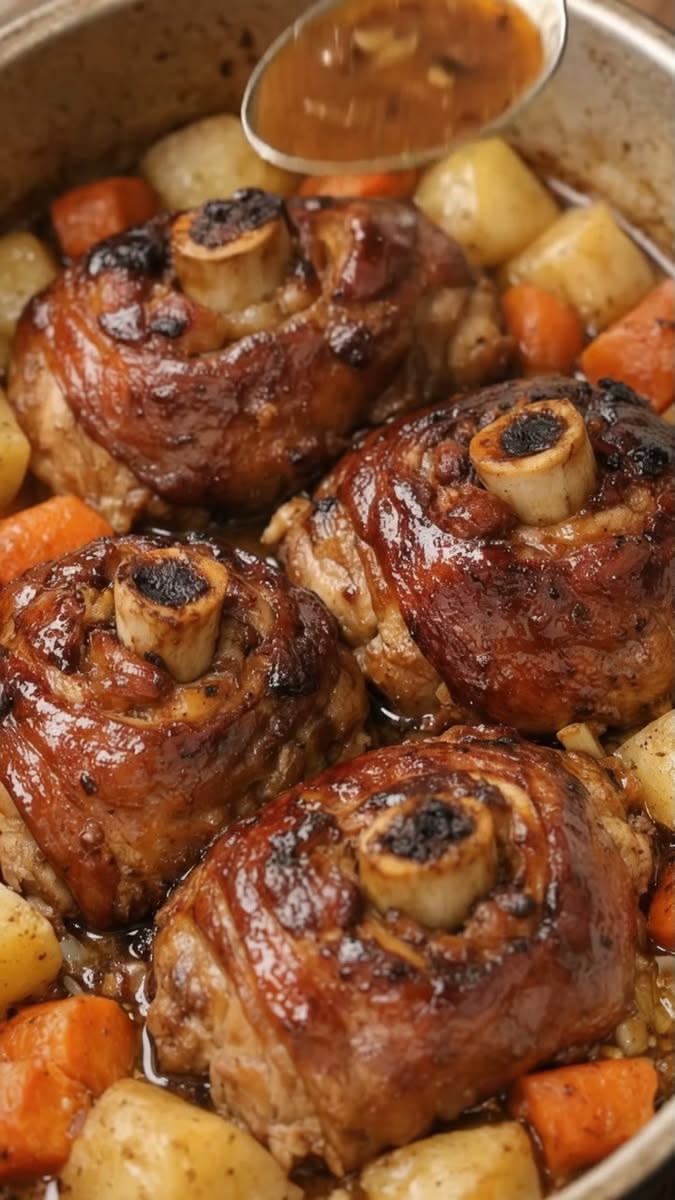
Roasted Beef Shanks with Potatoes (Fall-Off-the-Bone Tender One-Pot Dinner!)
Few dinners feel as satisfying as a pot of tender beef shanks roasted slowly alongside golden, garlicky potatoes. The meat turns so soft it slides right off the bone, the potatoes soak up the rich beefy juices, and the whole dish comes out of the oven looking like a feast, all from a single pot. I make this recipe on cold weekends when I want the house to smell incredible and dinner to need almost no attention once it is in the oven. It is an inexpensive cut of beef that tastes like a restaurant-quality meal, and the leftovers are even better the next day.
This guide covers everything you need: what makes roasted beef shanks special, how to choose the best shanks, ingredient notes, the complete recipe, step-by-step instructions, tips, variations, make-ahead and freezing advice, and answers to the most common questions.
What Are Roasted Beef Shanks?
Beef shanks are cross-cut slices from the lower leg of the animal, usually cut about 1 1/2 to 2 inches thick, with a round bone in the center filled with flavorful marrow. Because this muscle works hard, the meat is lean and full of connective tissue, which makes it tough if cooked quickly. Slow roasting in a covered pot with a little liquid breaks that connective tissue down into silky gelatin, leaving the meat extremely tender and creating a naturally rich sauce.
The method in this recipe is a mix of searing, braising, and roasting. The shanks are seared first for flavor, roasted slowly in a covered pot until tender, and finished uncovered so the tops and the potatoes brown beautifully.
Why You’ll Love This Recipe
- Incredibly tender beef. A long, gentle roast makes the meat fork-tender and juicy.
- A complete meal in one pot. Beef, potatoes, and vegetables cook together with minimal cleanup.
- Rich, built-in sauce. The pan juices become a savory gravy with no extra effort.
- Budget-friendly. Shanks are one of the most affordable cuts of beef.
- Mostly hands-off. After a short prep, the oven does the work.
- Great for gatherings. It looks impressive and can easily be doubled.
- Even better the next day. The flavors deepen as the dish rests.
What Do Roasted Beef Shanks with Potatoes Taste Like?
The beef is deeply savory and meaty, with a silky, almost buttery texture and a rich flavor from the marrow and the bone. The potatoes absorb the juices and become soft and creamy inside, with golden, lightly crisp edges where they roasted uncovered. Garlic, thyme, and a touch of tomato and wine add depth and a gentle tang that keeps the dish balanced rather than heavy.
How to Choose the Best Beef Shanks
Look for shanks that are about 1 1/2 to 2 inches (4 to 5 cm) thick, with a good ring of meat around the bone and plenty of visible connective tissue, since that is what turns into tender, silky texture. Choose pieces of similar size so they cook evenly. Bright red meat with white marbling and fat is a good sign of freshness.
If you cannot find them in the meat case, ask your butcher to cut shanks for you. Some stores sell them as “soup bones” or “beef shank cross cuts.” Plan on about one shank per person, which is generous for most appetites. If shanks are very large, one shank can often serve two people.
Ingredient Notes
- Beef shanks: Bone-in shanks give the best flavor and body. The marrow enriches the sauce.
- Potatoes: Baby potatoes or small Yukon Golds hold their shape and turn creamy. Avoid very floury potatoes, which can fall apart.
- Tomato paste: It adds concentrated savory sweetness and helps the sauce develop color.
- Red wine: A dry red wine adds depth and acidity. Use a wine you would drink, and see the variations if you prefer to skip it.
- Beef broth: Low-sodium broth lets you control the seasoning.
- Fresh thyme and rosemary: These woody herbs stand up to long cooking.
- Balsamic vinegar: A small splash brightens the finished sauce.
Before You Start: Quick Prep Checklist
- Take the beef out of the refrigerator 30 minutes before cooking.
- Preheat the oven to 325°F (165°C) with a rack in the lower third.
- Pat the shanks very dry with paper towels.
- Cut the vegetables and potatoes ahead of time, and keep the potatoes in cold water until needed.
- Make sure you have an oven-safe Dutch oven with a tight-fitting lid.
- Measure the broth, wine, and tomato paste.
With everything ready, the recipe moves quickly. Scroll down for the full ingredient list and step-by-step instructions.
Recipe at a Glance
| Detail | Information |
|---|---|
| Prep time | 25 minutes |
| Cook time | 3 hours 30 minutes |
| Total time | 3 hours 55 minutes |
| Yield | 4 servings |
| Difficulty | Easy to intermediate |
| Cuisine | European inspired |
| Method | Seared and oven-roasted |
Ingredients You’ll Need
For the Beef
- 4 beef shanks, bone-in, about 1 1/2 inches (4 cm) thick (about 3 1/2 pounds / 1.6 kg total)
- 1 1/2 teaspoons salt, plus more to taste
- 1 teaspoon black pepper
- 1 teaspoon smoked paprika
- 3 tablespoons olive oil, divided
For the Pot
- 1 large yellow onion, cut into wedges
- 3 medium carrots, peeled and cut into 2-inch (5 cm) pieces
- 5 cloves garlic, smashed
- 2 tablespoons tomato paste
- 1/2 cup (120 ml) dry red wine
- 2 cups (480 ml) low-sodium beef broth
- 2 bay leaves
- 4 sprigs fresh thyme
- 1 sprig fresh rosemary
- 1 tablespoon balsamic vinegar
For the Potatoes
- 1 1/2 pounds (680 g) baby potatoes, halved (or Yukon Gold potatoes cut into 2-inch pieces)
- 1 tablespoon olive oil
- 1/2 teaspoon salt
- 1/4 teaspoon black pepper
For Serving
- Chopped fresh parsley
- Flaky sea salt
Equipment
- Large Dutch oven (6 to 7 quart) with a tight-fitting lid
- Tongs
- Paper towels
- Instant-read thermometer
- Wooden spoon
How to Make Roasted Beef Shanks with Potatoes: Step by Step
Step 1: Season the Shanks
Pat the beef shanks completely dry with paper towels. Mix the salt, pepper, and paprika, and rub the mixture over all sides of each shank. Dry, well-seasoned meat browns far better than damp meat.
Step 2: Sear the Beef
Heat 2 tablespoons of the olive oil in the Dutch oven over medium-high heat until shimmering. Sear the shanks in batches for 4 to 5 minutes per side, until deeply browned. Do not crowd the pot. Transfer the shanks to a plate.
Step 3: Build the Base
Reduce the heat to medium and add the remaining tablespoon of oil. Cook the onion and carrots for 5 to 6 minutes, scraping up the browned bits. Add the garlic and tomato paste and cook for 1 to 2 minutes until the paste darkens slightly.
Step 4: Deglaze
Pour in the red wine and scrape the bottom of the pot. Simmer for 3 to 4 minutes until reduced by about half.
Step 5: Add the Liquid and Herbs
Stir in the beef broth, bay leaves, thyme, rosemary, and balsamic vinegar. Return the shanks to the pot, nestling them into the liquid so they are about two-thirds submerged.
Step 6: Roast Covered
Cover the pot with the lid and transfer it to the oven. Roast at 325°F (165°C) for 2 hours, until the meat is starting to become tender.
Step 7: Add the Potatoes
Toss the potatoes with the olive oil, salt, and pepper. Carefully remove the pot from the oven, and tuck the potatoes around and between the shanks, pressing them partly into the liquid. Cover again and roast for another 45 minutes.
Step 8: Finish Uncovered
Remove the lid, increase the oven temperature to 400°F (200°C), and roast for 25 to 30 minutes, until the potatoes are tender and golden at the edges, and the beef is fork-tender and browned on top.
Step 9: Rest and Serve
Let the pot rest for 10 to 15 minutes. Discard the bay leaves and herb stems, skim any excess fat from the surface, and taste the sauce, adjusting with salt, pepper, or a splash of balsamic vinegar. Sprinkle with parsley and flaky salt and serve hot, spooning the pan juices over each plate.
Tips for the Best Roasted Beef Shanks
- Dry the meat well. Moisture prevents browning, so pat each shank thoroughly.
- Sear in batches. Crowding steams the meat instead of browning it.
- Do not submerge the shanks completely. Leaving the tops exposed allows browning.
- Keep the oven low at first. Slow, gentle heat gives the most tender meat.
- Add the potatoes later. This keeps them from turning mushy during the long roast.
- Test for tenderness, not time. Shanks are done when a fork slides in with little resistance.
- Skim the fat. It makes the sauce cleaner and more balanced.
- Rest before serving. Ten to fifteen minutes lets the juices settle.
Ingredient Substitutions and Variations
- No wine: Replace the wine with extra broth and a tablespoon of red wine vinegar.
- Dark beer: Use a stout or porter for a malty, deeper flavor.
- Vegetables: Add parsnips, celery root, or mushrooms along with the carrots.
- Sweet potatoes: Use them in place of potatoes, and add them for the last 40 minutes.
- Spicy version: Add a pinch of red pepper flakes or a dried chili to the braising liquid.
- Lamb or veal shanks: Both work with this method. Lamb shanks may need about 2 to 2 1/2 hours.
- Gluten-free: The recipe is naturally gluten-free. Check your broth label.
- Gremolata finish: Mix chopped parsley, lemon zest, and a little minced garlic and sprinkle it on top for a fresh, bright contrast.
Slow Cooker, Instant Pot, and Stovetop Methods
Slow cooker: Sear the shanks and cook the vegetables and wine on the stovetop, then transfer everything to a slow cooker. Cook on low for 8 hours, adding the potatoes for the last 3 hours.
Instant Pot: Sear the shanks using the saute function, add the liquid and vegetables, and cook at high pressure for 55 minutes with a natural release. Add the potatoes and cook at high pressure for 5 more minutes.
Stovetop: Simmer covered over the lowest heat for 2 1/2 to 3 hours, turning occasionally, then add the potatoes for the last 40 minutes.
What to Serve with Roasted Beef Shanks
- Crusty bread for soaking up the sauce
- Steamed or roasted green beans
- A simple arugula salad with lemon dressing
- Buttered peas or sauteed greens
- Horseradish cream or Dijon mustard on the side
How to Store, Reheat, and Freeze
Make ahead: The dish improves overnight. Cool it, refrigerate in the sauce, and reheat gently the next day.
Refrigerator: Store the shanks and potatoes in the sauce in an airtight container for up to 4 days.
Reheating: Warm covered in a 325°F (165°C) oven for 25 to 30 minutes, or gently on the stovetop over low heat, adding a splash of broth if the sauce has thickened.
Freezer: Freeze the beef in its sauce for up to 3 months. Potatoes can become soft after freezing, so it is best to freeze the beef separately and cook fresh potatoes when serving.
Nutrition Information (Approximate)
Per serving (1 shank with potatoes and sauce, based on 4 servings): about 640 calories, 52 g protein, 38 g carbohydrates, 29 g fat, 5 g fiber. Values are estimates and vary with the cut, portion size, and ingredients you use.
Frequently Asked Questions
How long do beef shanks take to roast?
At 325°F (165°C), they usually take about 3 to 3 1/2 hours total. Thicker shanks may need more time.
How do I know when beef shanks are done?
The meat should be fork-tender and pulling away from the bone. An instant-read thermometer usually reads between 195°F and 205°F (90°C to 96°C) when the connective tissue has broken down.
Why are my beef shanks tough?
They are most likely undercooked. Shanks need long, slow cooking. Cover them again and keep roasting for another 30 minutes.
Should I cover beef shanks when roasting?
Yes, for most of the cooking time. Covering traps steam and keeps the meat moist. Uncovering at the end browns the tops and the potatoes.
Can I use frozen shanks?
It is best to thaw them first in the refrigerator for even cooking and good browning.
Do I have to sear the shanks?
Searing is not strictly required, but it builds much of the flavor and color. It is worth the extra 15 minutes.
Can I make this ahead of time?
Yes. It is often better the next day. Reheat gently in the sauce.
Can I eat the marrow?
Yes. The marrow becomes soft and rich during roasting and is delicious spread on bread.
Final Thoughts
Roasted beef shanks with potatoes show how simple ingredients and a little patience can create a spectacular dinner. With tender meat, creamy potatoes, and a deeply flavorful sauce, this one-pot meal is perfect for cold evenings, family gatherings, and any time you want a dish that feels special without a lot of work.
If you prepare this recipe, we would love to hear how it turned out. Please leave a rating and a comment below