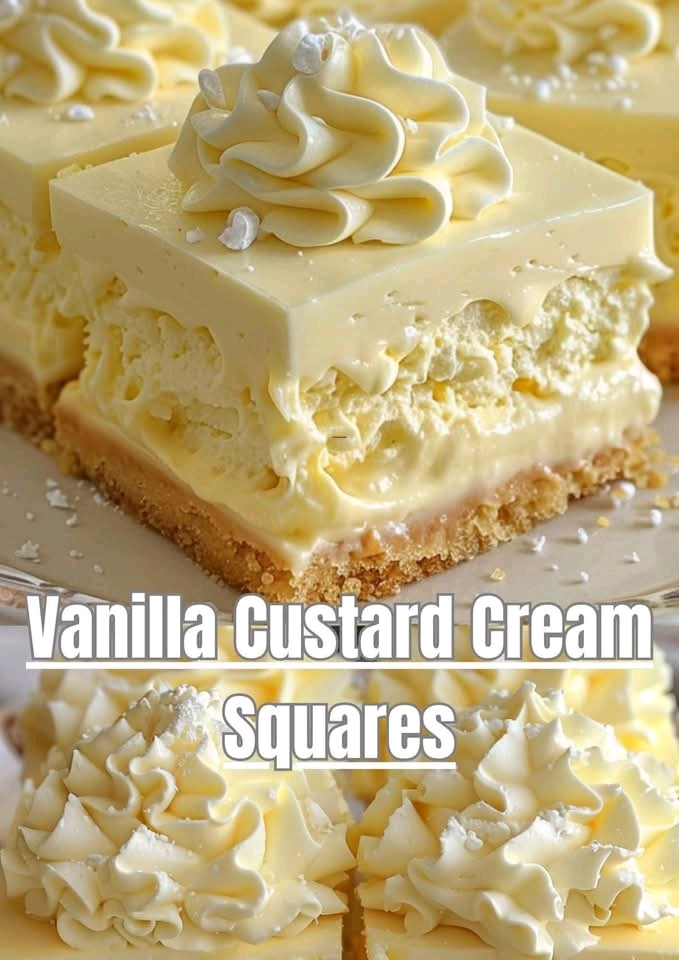
For the Whipped Cream Topping:
- 1 1/2 cups (360ml) heavy cream, very cold
- 1/4 cup (30g) confectioners’ sugar (powdered sugar)
- 1 teaspoon pure vanilla extract
- Optional: white sprinkles for garnish
shortbread cookies instead of digestive biscuits. If you’re looking for a gluten-free option, simply use gluten-free biscuits for the crust. The possibilities are endless, so feel free to get creative and make these squares truly your own!
Storage and Reheating
Vanilla Custard Cream Squares are best enjoyed chilled. Store any leftovers in an airtight container in the refrigerator for up to 3-4 days. It’s best to cover them loosely with plastic wrap or foil if they are in a pan, or place individual squares in an airtight container to prevent them from absorbing odors from other foods in the fridge. The biscuit crust may soften slightly over time, but the flavors of the custard and cream will remain delightful.
Due to the nature of the ingredients (custard and whipped cream), these squares do not freeze well, as freezing and thawing can alter the texture of both layers, making them watery or grainy. Therefore, it’s not recommended to freeze these squares. They are designed to be a fresh, chilled dessert. There is no reheating required or recommended for this dessert; it is intended to be served cold directly from the refrigerator.
Frequently Asked Questions
Can I make these squares ahead of time?
Absolutely! These Vanilla Custard Cream Squares are an excellent make-ahead dessert. In fact, they require significant chilling time for the custard to set properly, so preparing them the day before serving is ideal. Store them covered in the refrigerator, and add the whipped cream topping a few hours before serving for the freshest taste and best texture.
Why did my custard turn out lumpy?
Lumpy custard often occurs if the egg yolks are not tempered properly, if the heat is too high, or if the mixture isn’t stirred constantly while cooking. To avoid lumps, always whisk a small amount of hot milk into the egg yolk mixture first to gradually raise its temperature before adding it back to the saucepan. Cook over medium-low heat, stirring continuously with a whisk or rubber spatula, ensuring you scrape the bottom and sides of the pan. If lumps still appear, you can push the warm custard through a fine-mesh sieve for a perfectly smooth result.
Can I use a different type of crust?
Yes, you can certainly experiment with different crusts! While digestive biscuits or graham crackers are classic choices, you could also use shortbread cookies, vanilla wafers, or even a simple flour-based shortcrust pastry. If using a pastry, you would pre-bake it according to the recipe’s instructions before adding the custard. Just ensure that whatever crust you choose complements the delicate vanilla flavor of the custard.
How do I prevent the whipped cream from deflating?
To keep your whipped cream topping firm and fluffy, start with very cold heavy cream, and ideally, a chilled mixing bowl and whisk attachment. Beat only until stiff peaks form; overbeating can cause it to become grainy or separate. For extra stability, especially if serving outdoors or making ahead, you can add a stabilizer like a small amount of unflavored gelatin (dissolved and cooled) or a tablespoon of powdered milk or cream cheese to the cream before whipping. Always keep the finished squares refrigerated until serving