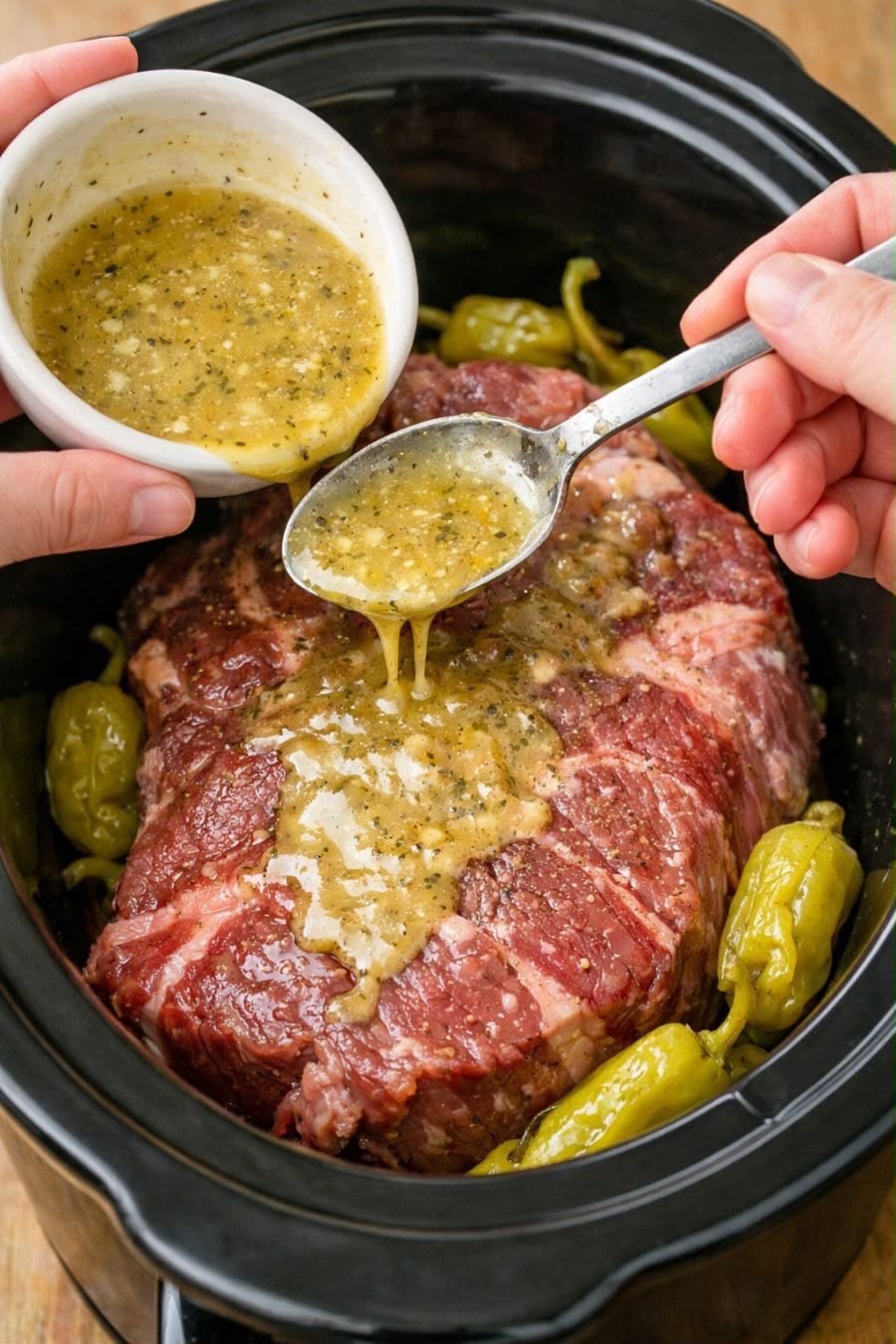
Slow Cooker Mississippi Pot Roast
If you love tender beef, rich savory gravy, and a dinner that practically cooks itself, this Slow Cooker Mississippi Pot Roast deserves a place in your regular meal rotation. Made with a beef chuck roast, ranch seasoning, au jus gravy mix, butter, and tangy pepperoncini peppers, this classic slow-cooker meal delivers incredible flavor with very little preparation.
As the roast cooks slowly, the beef becomes fork-tender and absorbs the buttery, savory cooking juices. The pepperoncini add a gentle tang that balances the richness of the meat without making the dish overwhelmingly spicy.
Serve this comforting pot roast over creamy mashed potatoes, alongside roasted vegetables, or tucked into warm sandwich rolls. Whether you’re preparing a family dinner or planning an easy weekend meal, this recipe is a delicious way to bring everyone to the table.
Why You’ll Love This Mississippi Pot Roast
- Easy preparation: Add the ingredients to your slow cooker and let it do most of the work.
- Incredibly tender beef: Slow cooking transforms chuck roast into juicy, pull-apart meat.
- Rich, savory flavor: Ranch seasoning, au jus mix, butter, and beef juices create a delicious cooking sauce.
- A tangy twist: Pepperoncini peppers balance the richness with a mild, vinegary flavor.
- Perfect for busy days: The hands-on preparation takes only about 10–15 minutes.
- Versatile serving options: Enjoy it with potatoes, rice, vegetables, noodles, or sandwich rolls.
- Great for leftovers: The shredded beef can be reused in several easy meals.
What Is Mississippi Pot Roast?
Mississippi Pot Roast is a popular American slow-cooker dish known for its simple ingredient list and tender, flavorful beef. The familiar version combines chuck roast with ranch seasoning mix, au jus gravy mix, butter, and pepperoncini peppers.
Unlike traditional pot roast recipes that often rely on red wine, carrots, celery, and a long list of herbs, Mississippi Pot Roast gets much of its distinctive flavor from convenient seasoning mixes and the tangy pepper brine.
During slow cooking, the beef releases flavorful juices that combine with the butter and seasonings to form a rich sauce. The finished roast can be sliced or shredded and served with the cooking juices spooned over the top.
Ingredients You’ll Need
For the Pot Roast
- 3–4 pounds beef chuck roast
- 1 packet ranch seasoning mix, about 1 ounce
- 1 packet au jus gravy mix, about 1 ounce
- ½ cup unsalted butter, cut into pieces
- 6–8 pepperoncini peppers
- 2 tablespoons pepperoncini juice, optional
- ¼ cup beef broth or water, only if needed
Optional Additions
- 1 pound baby potatoes
- 3–4 carrots, cut into large chunks
- 1 small yellow onion, sliced
- Freshly ground black pepper
- Chopped fresh parsley for garnish
A note about salt: Ranch seasoning and au jus mix can already contain substantial sodium. Start without adding extra salt and taste the cooking juices before adjusting the seasoning.
How to Make Slow Cooker Mississippi Pot Roast
Step 1: Prepare the Beef
Remove the chuck roast from its packaging and pat it dry with paper towels.
Trim away only large pieces of excess exterior fat, leaving some marbling to help keep the meat moist and flavorful.
Place the roast in the bottom of a 5- to 7-quart slow cooker. You do not need to cut the roast into pieces.
Step 2: Add the Seasonings
Sprinkle the ranch seasoning mix evenly over the top of the beef.
Next, sprinkle the au jus gravy mix over the roast. These seasoning mixes provide the dish’s signature savory flavor, so distribute them as evenly as possible.
Step 3: Add the Butter and Pepperoncini
Arrange the butter pieces across the top of the roast.
Add the pepperoncini peppers around and on top of the beef. For a stronger tangy flavor, spoon in a little pepperoncini juice.
The peppers contribute a mild acidity that helps balance the buttery richness of the finished dish.
Step 4: Add Liquid Only If Needed
This recipe usually produces plenty of liquid as the beef cooks. For that reason, you generally do not need to add a large amount of broth at the beginning.
If your slow cooker or roast tends to produce very little liquid, add about ¼ cup of beef broth or water.
Avoid covering the roast with liquid. The goal is tender beef with concentrated, flavorful cooking juices rather than a watery stew.
Step 5: Slow Cook Until Tender
Cover the slow cooker and cook according to your schedule:
- LOW: Approximately 8–9 hours.
- HIGH: Approximately 4–5 hours.
Cooking time varies depending on the thickness of the roast, your slow cooker, and the size of the beef.
The roast is ready when it is very tender and separates easily with a fork. For a pull-apart texture, the beef often needs to reach an internal temperature around 195–205°F (91–96°C), although tenderness is the most useful final check for this braised-style dish.
Keep the lid closed as much as possible to maintain a steady cooking temperature.
Step 6: Shred or Slice the Beef
Carefully transfer the cooked roast to a large plate or shallow dish.
Use two forks to pull the beef apart into large, tender pieces. Alternatively, slice it against the grain if you prefer more structured portions.
Discard any large pieces of fat and remove the pepperoncini stems if desired.
Step 7: Combine the Beef With the Juices
Return the shredded beef to the slow cooker and gently toss it with the cooking juices.
Let it sit in the warm sauce for about 5–10 minutes so the meat can absorb even more flavor.
If the juices seem too thin, transfer some to a saucepan and simmer until slightly reduced. Taste before adding salt or other seasonings.
Step 8: Serve and Enjoy
Spoon the tender beef onto a serving platter or individual plates.
Pour some of the rich cooking juices over the top and garnish with chopped parsley if desired.
Serve immediately with mashed potatoes, roasted vegetables, rice, egg noodles, or warm dinner rolls.
Tips for the Best Mississippi Pot Roast
Choose the Right Cut of Beef
Chuck roast is usually the best choice because its connective tissue and marbling soften during slow cooking. This creates the tender, shreddable texture that makes the recipe so satisfying.
Bottom round can also work, although it may be leaner and less forgiving.
Cook on LOW When Possible
The LOW setting is ideal when you have enough time. It allows the connective tissue to soften gradually and makes it easier to achieve a tender, pull-apart roast.
The HIGH setting is useful when necessary, but cooking times will vary.
Don’t Add Too Much Broth
The roast naturally releases moisture as it cooks. Too much additional liquid can dilute the flavorful sauce.
Start with no extra liquid or a small amount if your slow cooker requires it.
Adjust the Pepperoncini to Your Taste
For a milder flavor, use fewer peppers and omit the brine. For a tangier finish, add a little extra pepperoncini juice after cooking.
Pepperoncini are generally more tangy than hot, but their flavor and heat can vary by brand.
Let the Beef Rest Briefly
After removing the roast from the slow cooker, let it rest for a few minutes before shredding. This makes handling easier and gives you time to prepare the serving dishes.
Taste Before Serving
The seasoning packets, butter, and cooking juices all contribute flavor. Taste the sauce before adding extra salt, pepper, or broth.
Easy Variations
Mississippi Pot Roast With Potatoes and Carrots
For a more complete one-pot dinner, add baby potatoes and large carrot pieces around the roast.
Place the vegetables underneath or around the beef so they cook in the flavorful juices. Cut them into relatively large pieces to help them hold their shape during the long cooking time.
For the best texture, check that the vegetables are tender before serving.
Spicy Mississippi Pot Roast
For more heat, add a few sliced hot peppers or a small pinch of crushed red pepper flakes.
Add heat gradually so it does not overpower the ranch seasoning and tangy pepperoncini.
Mississippi Pot Roast With Onion
Add a sliced yellow onion beneath the roast. It softens during cooking and contributes a naturally sweet, savory flavor to the sauce.
Creamy Mississippi Pot Roast
For a creamier variation, stir a small amount of cream cheese or heavy cream into the cooking juices after the beef is tender.
Keep the heat gentle and stir until smooth. This changes the traditional sauce but creates a rich, creamy option for serving over potatoes or noodles.
Mississippi Pot Roast Sandwiches
Pile shredded beef onto toasted sandwich rolls and spoon a little cooking juice over the meat.
Add provolone or mozzarella if desired, then briefly broil the sandwiches until the cheese melts. Serve with extra pepperoncini on the side.
Gluten-Free Mississippi Pot Roast
Check the ingredient labels on the ranch seasoning and au jus mix, since formulations vary and may contain gluten or have cross-contact warnings.
Choose certified gluten-free products when needed, and make sure any broth or additional ingredients are suitable for your dietary requirements.
What to Serve With Mississippi Pot Roast
The savory cooking juices pair especially well with sides that can absorb the sauce.
- Creamy mashed potatoes: A classic choice for soaking up the gravy.
- Buttered egg noodles: Perfect for turning the beef into a hearty noodle dinner.
- Steamed green beans: Add freshness and color to the plate.
- Roasted carrots: Their natural sweetness complements the savory beef.
- Rice: A simple option that absorbs the cooking juices.
- Garlic bread or dinner rolls: Ideal for serving alongside the sauce.
- Roasted broccoli: Adds a slightly crisp texture to balance the tender beef.
- Simple green salad: A refreshing contrast to the rich roast.
For an easy family dinner, serve the pot roast over mashed potatoes with green beans and warm rolls.
How to Store Leftovers
Allow leftovers to cool slightly, then transfer the beef and cooking juices to shallow, airtight containers.
Refrigerate within 2 hours of cooking and use within 3–4 days.
Store the beef with some of its juices to help prevent it from drying out.
To reheat, place the desired portion in a covered saucepan over medium-low heat. Add a splash of beef broth or water if needed and heat until the meat reaches 165°F (74°C).
You can also reheat individual portions in the microwave, stirring or turning the meat periodically for even heating.
Can You Freeze Mississippi Pot Roast?
Yes. Mississippi Pot Roast freezes well when stored with some of its cooking juices.
- Allow the beef to cool.
- Divide it into meal-sized portions.
- Place the beef and sauce in freezer-safe containers or bags.
- Label with the date and freeze for up to 3 months for best quality.
- Thaw overnight in the refrigerator before reheating.
Reheat the thawed beef until it reaches 165°F (74°C). Add a little broth if the sauce has thickened during storage.
Freezing the meat with its juices helps preserve moisture and flavor.
Make-Ahead Instructions
You can prepare the ingredients in advance to make dinner easier.
The day before cooking, measure the seasoning mixes, prepare the pepperoncini, and portion the butter. Store the prepared ingredients in the refrigerator.
For food safety, keep raw beef refrigerated separately from ready-to-eat ingredients. Assemble the roast in the slow cooker shortly before cooking rather than leaving raw beef sitting at room temperature.
You can also cook the entire recipe ahead of time, refrigerate it promptly, and reheat the beef with its juices when ready to serve.
Common Mistakes to Avoid
Using a Lean Cut of Beef
Very lean cuts may not become as juicy and tender as chuck roast during long cooking. For the classic texture, choose a well-marbled chuck roast.
Adding Too Much Liquid
A large amount of broth can dilute the sauce. Remember that the beef releases its own juices as it cooks.
Opening the Lid Frequently
Every time you lift the lid, heat escapes and the cooking process slows down. Keep the lid closed unless you need to check doneness or add an ingredient.
Expecting the Beef to Shred Too Early
If the roast still feels firm or resists the fork, it may need more time. Continue cooking and check again rather than trying to shred it prematurely.
Adding Extra Salt Too Soon
The seasoning mixes can be salty, especially as the juices reduce. Taste the finished sauce before adding more salt.
Leaving Leftovers Out Too Long
Refrigerate leftovers within 2 hours to reduce the risk of foodborne illness. Store them in shallow containers so they cool more quickly.
Frequently Asked Questions
Do I need to sear the roast first?
No. Searing is optional for this recipe. It can add extra browned flavor, but the slow cooker can produce a delicious, tender roast without that step.
If you choose to sear the beef, brown it in a hot skillet before placing it in the slow cooker.
Can I make Mississippi Pot Roast without pepperoncini?
Yes, but the flavor will be different. Pepperoncini provide the tangy note that balances the rich butter and seasoning mixes. If you dislike them, leave them out, or use another mild pickled pepper you enjoy.
Should I mix the seasoning packets with water first?
No. For the traditional method, sprinkle the seasoning mixes directly over the beef. They will combine with the butter and natural cooking juices as the roast cooks.
Can I use salted butter?
Yes. However, because the seasoning mixes may already contain considerable sodium, unsalted butter makes it easier to control the final salt level.
Why is my Mississippi Pot Roast tough?
The beef may need more cooking time. Chuck roast often becomes tender only after its connective tissue has softened sufficiently. Continue cooking until the meat separates easily with a fork.
Can I cook this recipe overnight?
You can use the LOW setting if the recipe’s cooking time fits your schedule and you can follow your slow cooker’s safety instructions. Avoid leaving the cooked beef sitting at room temperature after the cooking cycle ends. Refrigerate leftovers promptly.
Can I use frozen beef in the slow cooker?
It is safer to thaw the roast in the refrigerator before putting it in a slow cooker. A frozen roast can remain too long at temperatures that allow harmful bacteria to multiply.
Is Mississippi Pot Roast spicy?
The traditional version is generally tangy and savory rather than very spicy. The heat depends on the peppers and their brine. Use fewer peppers and skip the brine for a milder result.
Recipe Card
Slow Cooker Mississippi Pot Roast
Prep Time: 10–15 minutes
Cook Time: 8–9 hours on LOW or 4–5 hours on HIGH
Total Time: Approximately 8 hours 15 minutes on LOW
Servings: 6–8
Course: Main Course
Cuisine: American
Cooking Method: Slow Cooker
Ingredients
- 3–4 pounds beef chuck roast
- 1 packet ranch seasoning mix, about 1 ounce
- 1 packet au jus gravy mix, about 1 ounce
- ½ cup unsalted butter, cut into pieces
- 6–8 pepperoncini peppers
- 2 tablespoons pepperoncini juice, optional
- ¼ cup beef broth or water, only if needed
- Chopped fresh parsley, optional
Instructions
- Place the chuck roast in the slow cooker.
- Sprinkle the ranch seasoning and au jus mix evenly over the beef.
- Arrange the butter pieces on top and add the pepperoncini.
- Add the pepperoncini juice if you want extra tang.
- Add a small amount of broth or water only if needed.
- Cover and cook on LOW for 8–9 hours or HIGH for 4–5 hours, until the beef is fork-tender.
- Transfer the roast to a plate and shred with two forks, or slice against the grain.
- Return the beef to the cooking juices and stir gently.
- Taste the sauce and adjust the seasoning if necessary.
- Serve hot with mashed potatoes, vegetables, noodles, or sandwich rolls.
Nutrition Information
Nutrition values vary according to the size and fat content of the roast, the seasoning brands, the amount of butter, and the portion size.
For an accurate estimate, calculate the nutrition using the exact ingredients and quantities you use. The dish can be high in sodium because ranch seasoning and au jus mix often contain salt.
Final Thoughts
Slow Cooker Mississippi Pot Roast is a comforting, low-effort dinner with tender beef, buttery savory juices, and a bright, tangy flavor from pepperoncini peppers. With just a few ingredients and a little preparation, you can create a satisfying meal that feels special without requiring hours of hands-on cooking.
Serve it over creamy mashed potatoes, add your favorite vegetables, and save the leftovers for sandwiches or another easy dinner. Once you try this simple slow-cooker classic, it may become one of your favorite recipes for busy weeknights and relaxed family meals.