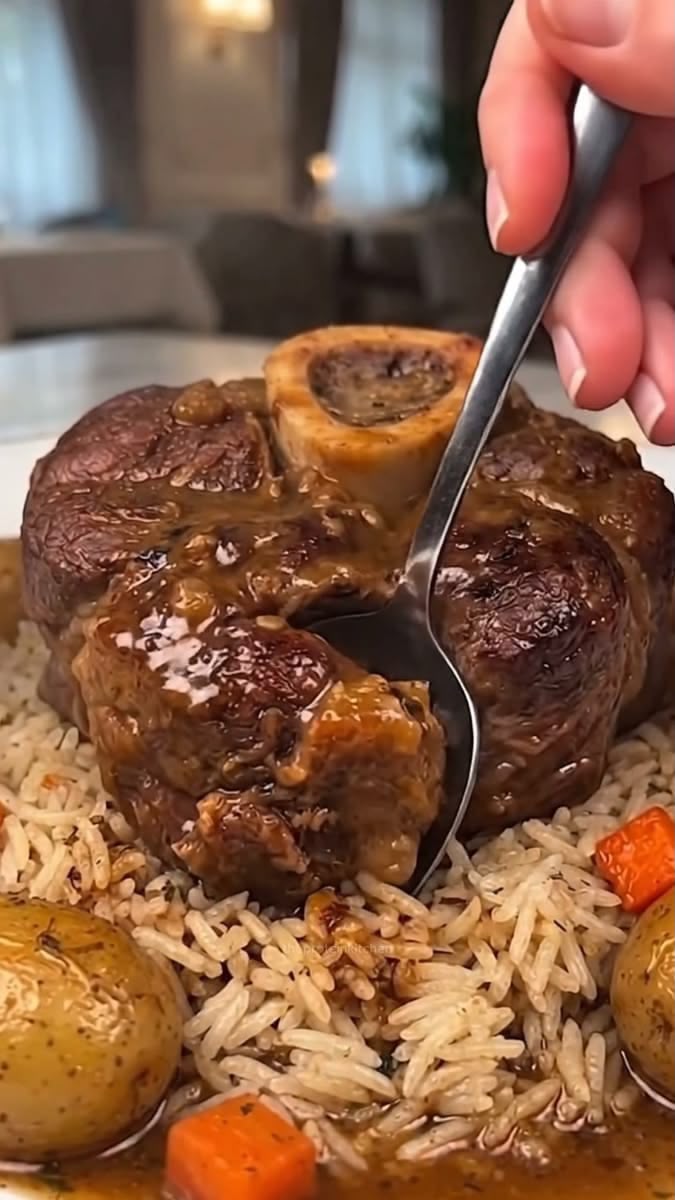
Braised Beef Shanks: Fall-Off-the-Bone Tender in a Rich Red Wine Sauce
Braised beef shanks are the kind of dish that makes a kitchen smell wonderful for hours and rewards you with meat so tender it can be eaten with a spoon. Seared until deeply browned, then simmered slowly with red wine, tomatoes, and aromatic vegetables, the tough, inexpensive shank transforms into something rich, silky, and deeply flavorful. I make this recipe on slow weekends and cold evenings, and it never fails to feel like a special occasion without requiring any difficult technique.
This guide covers the complete recipe, step-by-step instructions, professional tips, variations, make-ahead and freezing advice, and answers to the most common questions, so your beef shanks come out tender and flavorful every time.
Recipe at a Glance
| Detail | Information |
|---|---|
| Prep time | 25 minutes |
| Cook time | 3 hours |
| Total time | 3 hours 25 minutes |
| Yield | 4 servings |
| Difficulty | Easy to intermediate |
| Cuisine | European inspired |
| Method | Oven-braised |
What Are Braised Beef Shanks?
Beef shanks are cross-cut slices from the lower leg of the animal, usually cut about 1 1/2 to 2 inches thick, with a round bone in the center filled with marrow. Because the leg works hard, the meat is lean, full of connective tissue, and tough if cooked quickly. Braising, which means searing the meat and then cooking it slowly in liquid at a low temperature, breaks down that connective tissue into gelatin. The result is meat that is extremely tender and a sauce that becomes naturally rich and glossy.
Beef shanks are also the cut used for classic dishes like osso buco, which is traditionally made with veal shanks, and many slow-cooked stews around the world.
Why You’ll Love This Recipe
- Incredibly tender. The slow braise turns tough meat into spoon-tender perfection.
- Deep, layered flavor. Searing, wine, tomatoes, and herbs build a complex sauce.
- Budget-friendly. Shanks are an inexpensive cut that tastes luxurious.
- Mostly hands-off. After the initial prep, the oven does the work.
- Better the next day. The flavors deepen as it rests, making it ideal for make-ahead meals.
- Impressive presentation. A bone-in shank with glossy sauce looks restaurant-worthy.
Ingredients You’ll Need
For the Beef
- 4 beef shanks, bone-in, about 1 1/2 inches (4 cm) thick (about 3 1/2 pounds / 1.6 kg total)
- 1 1/2 teaspoons salt, plus more to taste
- 1 teaspoon black pepper
- 1/4 cup (30 g) all-purpose flour, for dredging
- 3 tablespoons olive oil or neutral oil, divided
For the Braise
- 1 large yellow onion, diced
- 2 medium carrots, peeled and diced
- 2 celery stalks, diced
- 5 cloves garlic, smashed
- 2 tablespoons tomato paste
- 1 cup (240 ml) dry red wine, such as Cabernet Sauvignon, Merlot, or Chianti
- 2 cups (480 ml) low-sodium beef broth
- 1 can (14.5 oz / 410 g) diced tomatoes, undrained
- 2 bay leaves
- 4 sprigs fresh thyme (or 1 teaspoon dried)
- 1 sprig fresh rosemary
- 1 tablespoon balsamic vinegar
For Serving
- Fresh chopped parsley
- Optional gremolata: 2 tablespoons parsley, zest of 1 lemon, and 1 minced garlic clove
Equipment
- Large Dutch oven or heavy oven-safe pot with a tight-fitting lid
- Tongs
- Instant-read thermometer
- Paper towels
- Fine-mesh strainer (optional)
How to Make Braised Beef Shanks: Step by Step
Step 1: Preheat and Prepare the Meat
Preheat the oven to 325°F (165°C). Pat the beef shanks completely dry with paper towels. Dry meat browns much better than damp meat. Season them on all sides with the salt and pepper, then dredge lightly in the flour, shaking off the excess.
Step 2: Sear the Shanks
Heat 2 tablespoons of oil in the Dutch oven over medium-high heat until it shimmers. Working in batches so the pot is not crowded, sear the shanks for 4 to 5 minutes per side until deeply browned. Transfer them to a plate. Do not rush this step, since the browning builds much of the flavor.
Step 3: Cook the Vegetables
Reduce the heat to medium and add the remaining tablespoon of oil. Add the onion, carrots, and celery and cook for 6 to 8 minutes, scraping up the browned bits from the bottom of the pot, until softened. Add the garlic and tomato paste and cook for 1 to 2 minutes, stirring, until the paste darkens slightly.
Step 4: Deglaze with Wine
Pour in the red wine and scrape the bottom of the pot to release any browned bits. Simmer for 5 minutes until the wine has reduced by about half.
Step 5: Add the Liquids and Herbs
Stir in the beef broth, diced tomatoes, bay leaves, thyme, rosemary, and balsamic vinegar. Bring to a simmer.
Step 6: Braise in the Oven
Nestle the shanks back into the pot so they are mostly submerged, with the liquid reaching about two-thirds of the way up the meat. Cover with the lid and transfer to the oven. Braise for 2 1/2 to 3 hours, turning the shanks once halfway through, until the meat is fork-tender and pulling away from the bone.
Step 7: Finish the Sauce
Carefully remove the shanks to a platter and cover loosely with foil. Skim any visible fat from the surface of the sauce. Remove the bay leaves and herb stems. For a smoother sauce, strain it or blend it with an immersion blender. Simmer the sauce on the stovetop over medium heat for 10 to 15 minutes until slightly thickened and glossy. Taste and adjust the seasoning with salt, pepper, or a splash of balsamic vinegar.
Step 8: Serve
Return the shanks to the sauce, or spoon the sauce over them on a serving plate. Top with parsley or gremolata and serve hot.
Tips for the Best Braised Beef Shanks
- Dry the meat well. Moisture prevents browning, so pat each shank thoroughly.
- Sear in batches. Overcrowding steams the meat instead of browning it.
- Do not submerge completely. Leaving the tops partly exposed lets them brown while the bottoms simmer.
- Keep the oven low. A gentle 325°F (165°C) ensures even, tender cooking without toughening the meat.
- Test for tenderness, not time. Shanks are done when a fork slides in with no resistance. Cooking times vary by thickness.
- Skim the fat. It makes the sauce cleaner and more refined.
- Rest in the sauce. Letting the shanks sit in the sauce for 15 to 20 minutes after cooking keeps them juicy.
- Use a wine you would drink. Avoid anything labeled “cooking wine,” which is often salty and harsh.
Ingredient Substitutions and Variations
- Wine: Replace the wine with additional beef broth plus 1 tablespoon of red wine vinegar for an alcohol-free version.
- Dark beer: Use a stout or porter in place of wine for a malty, deeper flavor.
- Vegetables: Add parsnips, mushrooms, or pearl onions during the last hour.
- Herbs and spices: Try a strip of orange peel, a cinnamon stick, or a few juniper berries for variety.
- Spicy version: Add a pinch of red pepper flakes or a dried chili.
- Veal or lamb shanks: Both work with this method. Lamb shanks may need about 2 to 2 1/2 hours.
- Gluten-free: Skip the flour dredge or use a gluten-free flour blend, and check your broth label.
Slow Cooker, Instant Pot, and Stovetop Methods
Slow cooker: Sear the shanks and cook the vegetables and wine on the stovetop, then transfer everything to a slow cooker. Cook on low for 8 to 9 hours or on high for 5 to 6 hours.
Instant Pot or pressure cooker: Use the saute function for searing, then cook at high pressure for 55 to 60 minutes with a natural release. Reduce the sauce afterward using the saute function.
Stovetop: Simmer, covered, over the lowest heat for 2 1/2 to 3 hours, turning occasionally and checking that the liquid does not evaporate.
What to Serve with Braised Beef Shanks
- Creamy mashed potatoes or soft polenta
- Buttered egg noodles or pappardelle
- Roasted root vegetables
- Crusty bread for soaking up the sauce
- A simple arugula salad with lemon dressing
- Steamed green beans or sauteed greens
How to Store, Reheat, and Freeze
Make ahead: Braised shanks improve overnight. Cool the dish, refrigerate in the sauce, and reheat gently the next day.
Refrigerator: Store the shanks submerged in sauce in an airtight container for up to 4 days.
Reheating: Warm covered in a 325°F (165°C) oven for 25 to 30 minutes, or gently on the stovetop over low heat. Add a splash of broth if the sauce has thickened.
Freezer: Freeze the shanks in their sauce for up to 3 months. Thaw overnight in the refrigerator before reheating.
Nutrition Information (Approximate)
Per serving (based on 4 servings, including sauce): about 560 calories, 52 g protein, 14 g carbohydrates, 29 g fat, 3 g fiber. Values are estimates and vary with the cut, portion size, and ingredients you use.
Frequently Asked Questions
How long does it take to braise beef shanks?
At 325°F (165°C), they typically take 2 1/2 to 3 hours. Thicker shanks may need up to 3 1/2 hours.
How do I know when beef shanks are done?
The meat should be fork-tender, easily separating from the bone. An instant-read thermometer typically reads between 195°F and 205°F (90°C to 96°C) when the connective tissue has broken down.
Why are my beef shanks tough?
They are usually undercooked. Shanks contain a lot of connective tissue and need long, slow cooking. If they are still tough, cover them again and continue braising for another 30 minutes.
Do I have to use wine?
No. Replace it with extra broth and a splash of red wine vinegar or balsamic vinegar for acidity.
Can I eat the marrow?
Yes. The marrow in the center of the bone becomes soft and rich during braising. Many people enjoy spreading it on bread.
Should I trim the fat?
Trim any large pieces of exterior fat before searing, but leave the connective tissue, which becomes tender and gives the sauce body.
Can I use bone-in short ribs instead?
Yes. Short ribs work well with the same method and usually need about 2 1/2 hours.
Can I make the sauce thicker?
Simmer it uncovered on the stovetop until it reduces, or stir in a small slurry of cornstarch and water.
Final Thoughts
Braised beef shanks show what patience and simple technique can do for an inexpensive cut of meat. With careful searing, a flavorful braising liquid, and a slow oven, you create a dish that is deeply satisfying, elegant enough for guests, and easy enough for a quiet weekend dinner.
If you prepare this recipe, we would love to hear how it turned out. Please leave a rating and a comment below