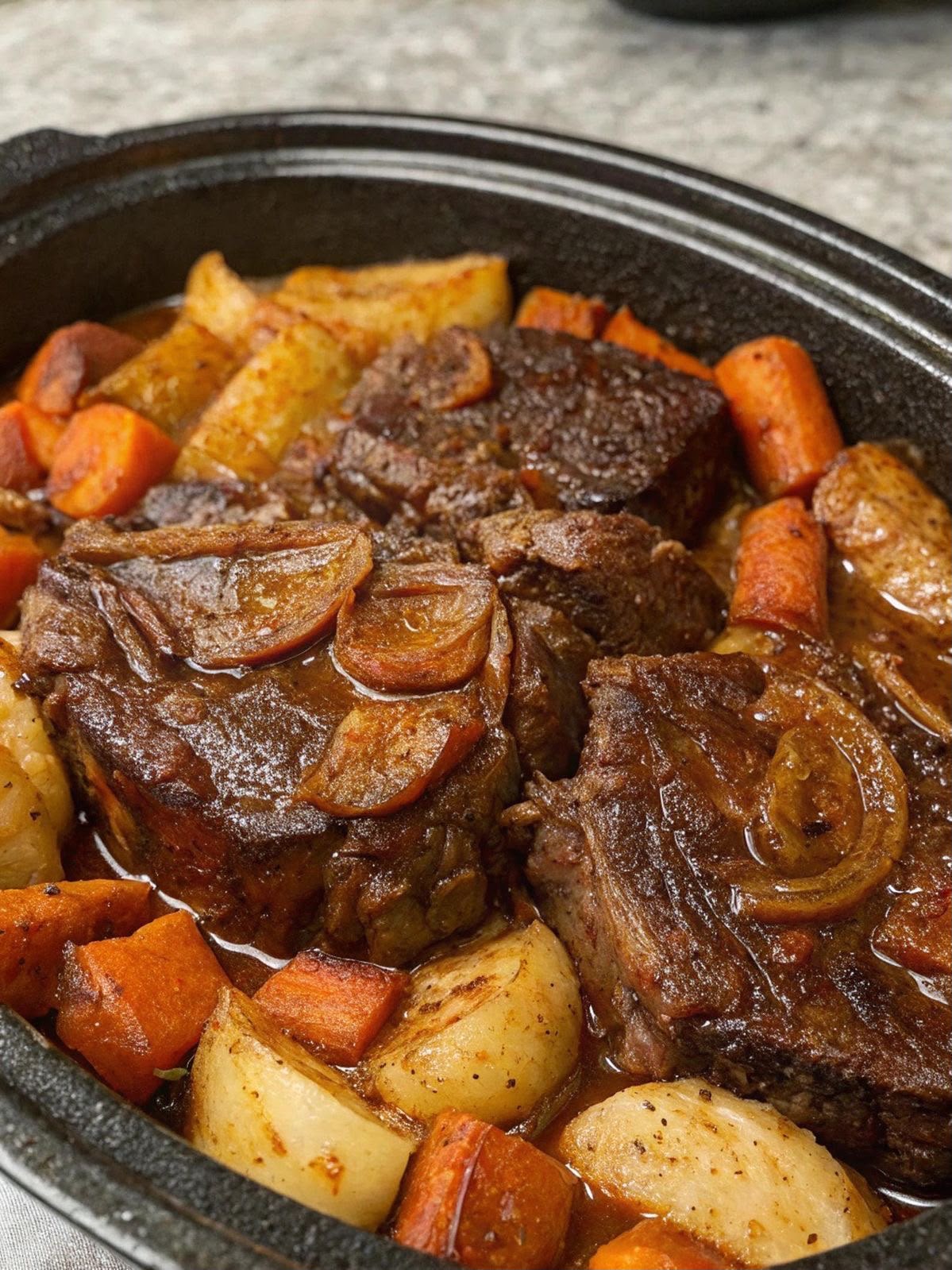
Slow Cooker Beef Roast with Potatoes (Fork-Tender, Juicy, and Full of Flavor!)
There is something deeply comforting about coming home to a slow cooker full of tender beef roast, soft potatoes, and sweet carrots, all swimming in a rich, savory gravy. This slow cooker beef roast with potatoes is the kind of meal that makes the whole house smell wonderful and asks for almost nothing in return. You season the roast, add the vegetables and broth, and let the slow cooker work its magic while you go about your day. By dinnertime, the beef is so tender it shreds with a fork, and the vegetables have soaked up all the good juices. It is a reliable, budget-friendly classic that never goes out of style.
This guide covers everything you need: what makes this roast special, how to choose the best cut of beef, ingredient notes, the complete recipe, step-by-step instructions, tips, variations, make-ahead and freezing advice, and answers to the most common questions.
What Is a Slow Cooker Beef Roast?
A slow cooker beef roast, often called pot roast, is a large cut of beef cooked low and slow with vegetables and liquid until it becomes extremely tender. The long, gentle cooking time breaks down the tough connective tissue in the meat, turning it into rich gelatin that makes the beef juicy and the cooking liquid silky. Because the slow cooker traps moisture, the meat stays succulent instead of drying out, and the potatoes and carrots cook right alongside it in the flavorful juices.
Why You’ll Love This Recipe
- Truly hands-off. Minimal prep, then the slow cooker does all the work.
- Fork-tender beef. Long, gentle cooking produces meat that falls apart.
- A complete meal in one pot. Beef, potatoes, and carrots cook together.
- Built-in gravy. The cooking juices become a rich, savory sauce.
- Budget-friendly. Chuck roast is an affordable cut that feeds a crowd.
- Perfect for busy days. Prepare it in the morning and dinner is ready when you are.
- Great leftovers. Use the extra beef in sandwiches, tacos, or soup.
What Does It Taste Like?
The beef is deeply savory and meaty, with a soft, juicy texture that pulls apart effortlessly. The potatoes turn creamy and absorb the rich beefy broth, while the carrots become sweet and tender. A touch of tomato paste, Worcestershire sauce, and herbs adds depth, and the gravy ties everything together with a velvety, savory finish.
How to Choose the Best Beef Roast
The best cut for slow cooking is chuck roast, also sold as chuck eye roast or shoulder roast. It comes from the shoulder, where the meat has plenty of marbling and connective tissue, which is exactly what melts into tenderness during a long cook. Look for a roast of about 3 to 3 1/2 pounds (1.4 to 1.6 kg) with good white streaks of fat running through the meat.
Other cuts such as bottom round, rump roast, or brisket also work, though leaner cuts like round can turn drier and need careful timing. Avoid very lean cuts and cuts meant for quick cooking, like tenderloin or sirloin, since they do not benefit from long cooking and can become tough or dry.
Ingredient Notes
- Chuck roast: The marbling and connective tissue make it the most tender and flavorful choice.
- Potatoes: Baby potatoes or Yukon Golds hold their shape and cook to a creamy texture. Russets can fall apart.
- Carrots: Cut into large chunks so they do not turn mushy over the long cook.
- Tomato paste: Adds concentrated savory sweetness and a deeper color to the gravy.
- Worcestershire sauce: Gives the broth a rich, savory depth.
- Beef broth: Choose low-sodium so you can control the seasoning.
- Fresh thyme and rosemary: These woody herbs hold up to long cooking.
- Cornstarch: A simple slurry turns the juices into a thick gravy at the end.
Before You Start: Quick Prep Checklist
- Take the roast out of the refrigerator about 30 minutes before cooking.
- Pat the beef very dry with paper towels.
- Cut the potatoes and carrots into large, even pieces.
- Slice the onion and smash the garlic.
- Measure the broth and seasonings.
- Make sure your slow cooker is at least 6 quarts so the roast fits comfortably.
With everything ready, the recipe is quick to assemble. Scroll down for the full ingredient list and step-by-step instructions.
Recipe at a Glance
| Detail | Information |
|---|---|
| Prep time | 20 minutes |
| Cook time | 8 to 10 hours on low |
| Total time | About 8 hours 20 minutes to 10 hours 20 minutes |
| Yield | 6 servings |
| Difficulty | Easy |
| Cuisine | American comfort food |
| Method | Slow cooker |
Ingredients You’ll Need
For the Beef Roast
- 1 boneless beef chuck roast, 3 to 3 1/2 pounds (1.4 to 1.6 kg)
- 2 teaspoons salt
- 1 teaspoon black pepper
- 1 teaspoon garlic powder
- 1 teaspoon smoked paprika
- 2 tablespoons olive oil, for searing
For the Slow Cooker
- 1 large yellow onion, cut into thick wedges
- 4 cloves garlic, smashed
- 1 1/2 pounds (680 g) baby potatoes, halved (or Yukon Gold potatoes cut into 2-inch pieces)
- 4 medium carrots, peeled and cut into 2-inch (5 cm) pieces
- 1 1/2 cups (360 ml) low-sodium beef broth
- 2 tablespoons tomato paste
- 2 tablespoons Worcestershire sauce
- 1 tablespoon balsamic vinegar
- 2 bay leaves
- 4 sprigs fresh thyme
- 1 sprig fresh rosemary
For the Gravy
- 2 tablespoons cornstarch
- 3 tablespoons cold water
For Serving
- Chopped fresh parsley
Equipment
- 6 to 7-quart (5.7 to 6.6 L) slow cooker
- Large skillet
- Tongs
- Instant-read thermometer
- Small saucepan or bowl
How to Make Slow Cooker Beef Roast with Potatoes: Step by Step
Step 1: Season the Roast
Pat the roast completely dry with paper towels. Mix the salt, pepper, garlic powder, and paprika, then rub the mixture all over the beef. If your roast is very large, you can cut it into two or three big chunks so it cooks more evenly and fits easily in the slow cooker.
Step 2: Sear the Beef
Heat the olive oil in a large skillet over medium-high heat until shimmering. Sear the roast for 3 to 4 minutes per side until deeply browned. Browning adds a rich, roasted flavor that makes a big difference. You can skip this step if you are short on time, but the flavor will be a little milder.
Step 3: Layer the Vegetables
Place the onion wedges and garlic in the bottom of the slow cooker. Add the carrots and potatoes around the edges. The onions form a base that keeps the roast from sitting directly on the bottom.
Step 4: Add the Beef
Set the seared roast on top of the vegetables. Whisk together the broth, tomato paste, Worcestershire sauce, and balsamic vinegar and pour the mixture around (not over) the roast so the seasoning crust stays intact. Tuck the bay leaves, thyme, and rosemary around the beef.
Step 5: Cook Low and Slow
Cover and cook on low for 8 to 10 hours, or on high for 4 to 6 hours, until the beef is very tender and shreds easily with a fork. The internal temperature should reach about 200°F (93°C) for fully tender, fall-apart meat.
Step 6: Rest the Roast
Carefully transfer the roast and vegetables to a serving platter and cover loosely with foil. Remove the bay leaves and herb stems from the cooking liquid.
Step 7: Make the Gravy
Pour the cooking liquid into a saucepan and skim off any excess fat. Whisk the cornstarch with the cold water until smooth and stir it into the liquid. Simmer over medium heat for 3 to 5 minutes, until thickened. Taste and adjust the seasoning with salt, pepper, or a splash of balsamic vinegar.
Step 8: Serve
Shred or slice the beef, arrange it with the vegetables, and spoon the gravy over the top. Sprinkle with parsley and serve hot.
Tips for the Best Slow Cooker Beef Roast
- Choose chuck roast. The marbling and connective tissue give the best texture.
- Dry the meat before searing. Moisture prevents browning.
- Do not add too much liquid. The roast should be about halfway submerged, since the meat and vegetables release juices as they cook.
- Cut vegetables in large pieces. They will not turn to mush during the long cook.
- Keep the lid closed. Lifting the lid releases heat and adds cooking time.
- Cook until tender, not by time. Roasts vary in size, so test with a fork.
- Rest before serving. Ten minutes lets the juices settle.
- Thicken at the end. A cornstarch slurry makes quick, glossy gravy.
Ingredient Substitutions and Variations
- Beef cut: Use bottom round, rump roast, or brisket. Leaner cuts may need a shorter cooking time.
- Vegetables: Add parsnips, celery, mushrooms, or turnips. Add delicate vegetables like peas near the end.
- Sweet potatoes: Use them instead of white potatoes, adding them for the last 3 hours.
- Wine: Replace 1/2 cup of the broth with dry red wine for added depth.
- Onion soup version: Add a packet of dry onion soup mix for a classic shortcut.
- Spicy version: Add a pinch of red pepper flakes or a few dashes of hot sauce.
- Gluten-free: The recipe is naturally gluten-free. Check your Worcestershire sauce and broth labels.
- Shredded beef style: Shred the meat and serve in sandwiches or over rice.
Slow Cooker vs. Oven vs. Instant Pot
Slow cooker: The easiest and most hands-off option.
Oven: Sear the roast in a Dutch oven, add the vegetables and liquid, cover, and cook at 300°F (150°C) for 3 to 3 1/2 hours, until tender.
Instant Pot: Sear using the saute function, add the liquid, and cook at high pressure for 60 to 70 minutes with a natural release. Add the potatoes and carrots during the last 10 minutes of pressure cooking, or cook them separately.
What to Serve with Beef Roast
- Crusty bread or dinner rolls
- Steamed green beans or buttered peas
- A simple green salad
- Horseradish cream or Dijon mustard
- Yorkshire pudding or biscuits, for soaking up the gravy
How to Store, Reheat, and Freeze
Refrigerator: Store leftovers with gravy in an airtight container for up to 4 days.
Reheating: Warm gently on the stovetop over low heat with a splash of broth, or in a 325°F (165°C) oven, covered, for 20 to 25 minutes.
Freezer: Freeze the beef and gravy in freezer-safe containers for up to 3 months. Potatoes can become soft and grainy after freezing, so it is best to freeze the beef and gravy separately from the potatoes. Thaw overnight in the refrigerator before reheating.
Leftover ideas: Use the beef for sandwiches, tacos, beef and noodle soup, shepherd’s pie, or a hearty hash.
Nutrition Information (Approximate)
Per serving (based on 6 servings, including potatoes, carrots, and gravy): about 560 calories, 42 g protein, 32 g carbohydrates, 29 g fat, 5 g fiber. Values are estimates and vary with the cut and ingredients you use.
Frequently Asked Questions
How long does it take to cook a beef roast in a slow cooker?
A 3-pound chuck roast typically takes 8 to 10 hours on low or 4 to 6 hours on high. It is done when the meat shreds easily with a fork.
Why is my slow cooker roast tough?
Tough roast is usually undercooked, not overcooked. Chuck roast needs time to break down its connective tissue. If it is still tough, keep cooking for another hour or two.
Should I cook it on low or high?
Low gives the most tender, evenly cooked results, but high works if you are short on time.
Do I have to sear the roast?
No, but searing adds a deeper, roasted flavor and a better color. It is worth the extra 10 minutes if you have the time.
Should the roast be covered with liquid?
No. The liquid should come about halfway up the roast. The meat and vegetables release juices as they cook.
Can I use a frozen roast?
It is best to thaw it completely in the refrigerator first. Cooking a frozen roast in a slow cooker can keep it in the temperature danger zone for too long.
Why are my potatoes mushy?
The potatoes may have been cut too small or have been too starchy. Use large pieces of waxy potatoes like baby or Yukon Gold potatoes.
Can I add the potatoes later?
Yes. If you prefer firmer potatoes, add them for the last 4 hours on low.
Final Thoughts
Slow cooker beef roast with potatoes is a dependable classic for good reason. With simple ingredients and very little effort, you get tender, flavorful beef, creamy potatoes, and a rich gravy that feels like a warm hug on a plate. It is perfect for Sunday dinners, busy weeknights, and feeding a crowd.
If you prepare this recipe, we would love to hear how it turned out. Please leave a rating and a comment below